
Build Immersive Environments: NeRF vs Splatting
The Future of Virtual Production: NeRF vs Gaussian Splatting
AI filmmaking is changing fast. Therefore, studios must adapt their workflows to keep up. In 2026, creating digital worlds requires a mix of great graphics and fast processing. Consequently, the debate of nerf vs gaussian splatting has become central to modern virtual production.
Ultimately, this choice usually comes down to nerf vs gaussian splatting. Both tools offer unique benefits, but they serve very different needs. Additionally, making the wrong choice can waste time and money. Therefore, let us explore these tools so you can make a smart, informed decision.
Understanding Neural Radiance Fields (NeRF)
Neural Radiance Fields, or NeRF, changed 3D capture in 2020. This tech relies heavily on deep learning. For example, it uses complex neural networks to create new views from basic photos.
The software looks closely at 2D photos of a real place. Consequently, it calculates light rays to build a dense 3D model. This process is called neural rendering. As a result, it creates highly realistic lighting and shapes, and it handles reflections very well.
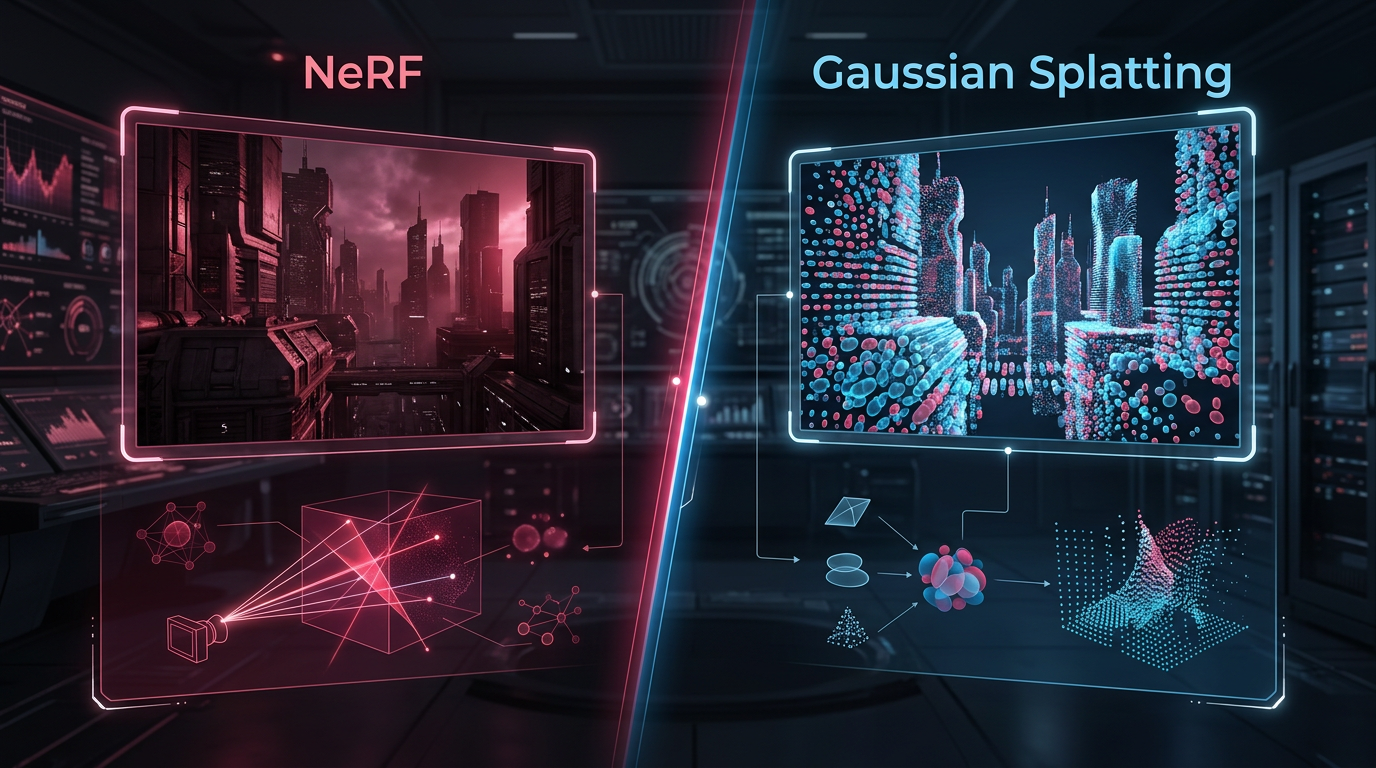
However, NeRF does have limits for big studios. The rendering process needs massive computer power to calculate light paths. Therefore, real-time playback is often slow and heavy.
Despite this slowdown, NeRF is still valuable. According to 2026 industry surveys, it is mainly used for research and small studies. Additionally, it creates very small file sizes. Thus, this makes it perfect for saving small, complex objects.
Before NeRF, making digital worlds meant slow manual 3D modeling. Furthermore, traditional methods struggled with clear materials like glass. NeRF fixed this by letting computers understand 3D space from flat 2D images. However, newer tools exist today, but NeRF remains a key foundation.
The Rise of 3D Gaussian Splatting
3D Gaussian Splatting offers a much faster option. Indeed, it completely skips the heavy neural network during playback. Instead, it builds the scene using millions of tiny 3D shapes called “splats.”
The rendering process uses fast, traditional methods. Consequently, this makes it incredibly quick and easy on computers. Therefore, 3D Gaussian Splatting is now the top choice for big industries.
In 2026, this tech rules virtual tours and building models. For instance, creators use it for real estate and high-end visual effects. Additionally, it allows for real-time interaction. As a result, filmmakers can move digital cameras through these worlds without lag.
The setup process is very user-friendly. First, operators just take video of a real location. Then, specialized software pulls frames and processes the data. Consequently, a fully 3D scene is made in a fraction of the time. This gives both solo creators and big studios access to Hollywood-level sets.
Performance Comparison: NeRF vs Gaussian Splatting
When analyzing nerf vs gaussian splatting, the performance data shows a clear winner. For example, a 2026 industry benchmark report proves 3D Gaussian Splatting beats NeRF easily. Furthermore, standard NeRF models take hours to train. In contrast, making a high-quality Gaussian Splat takes only 15 to 30 minutes.
The real-time speeds show an even bigger gap. Specifically, NeRF struggles to hit 15 frames per second. However, 3D Gaussian Splatting easily hits over 100 frames per second at 4K resolution. Therefore, this speed is vital for virtual production walls where time is money.
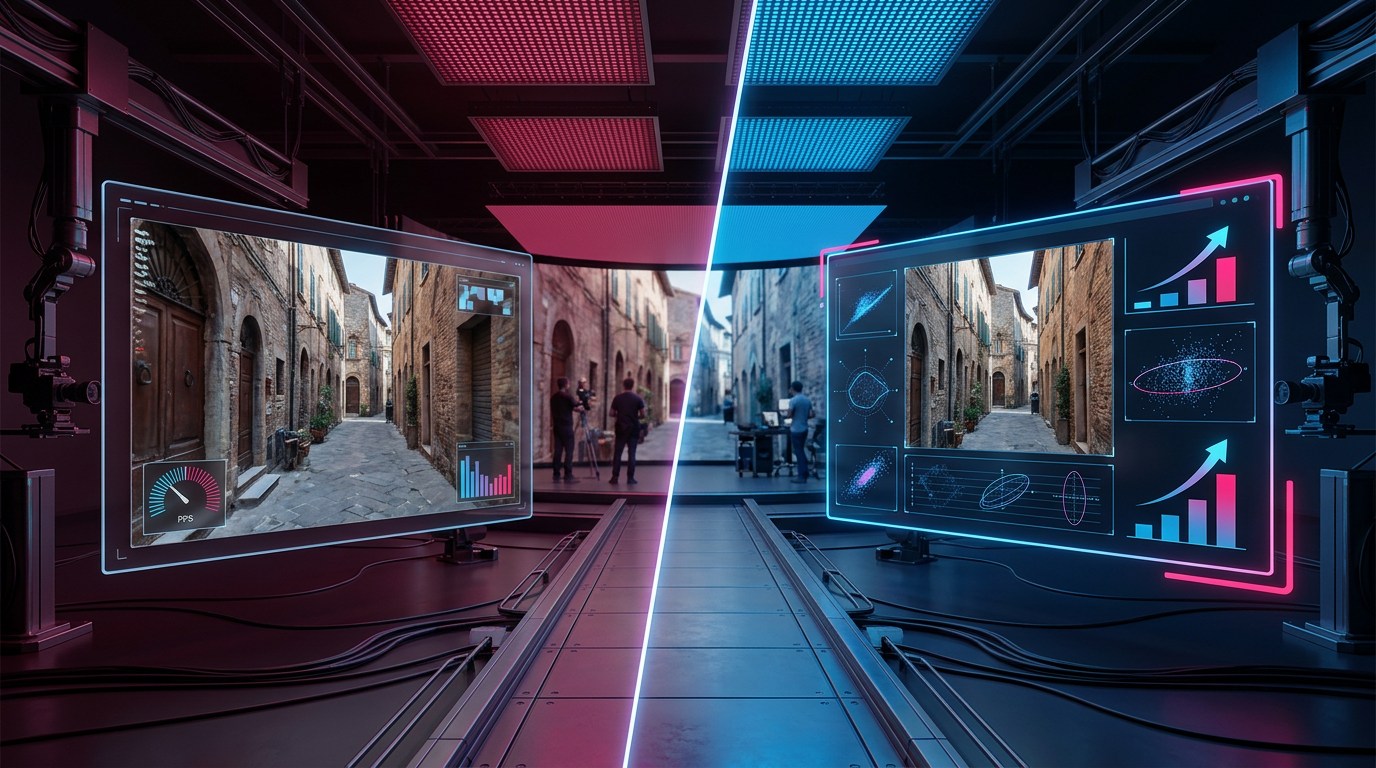
Visualizing NeRF vs Gaussian Splatting Architecture
Picture a graphic showing the two software types. On the left, the NeRF pipeline shows a complex neural network. It processes heavy data and shows a massive computer load.
On the right, the Splatting pipeline is much simpler. It shows flat 2D images turning quickly into a point cloud. These points expand into 3D shapes. Finally, they render rapidly onto a screen. This visual proves the sheer speed of modern splatting.
Tools and Ecosystem: Bringing it to Life
The software for these tools grew rapidly in 2026. It is now very easy to add them to existing studio workflows. 3D Gaussian Splatting is now an official industry standard. It was added to OpenUSD in April 2026.
The Khronos Group also added Gaussian Splatting to the glTF standard. Modern capture tools have evolved to support these formats right out of the box.
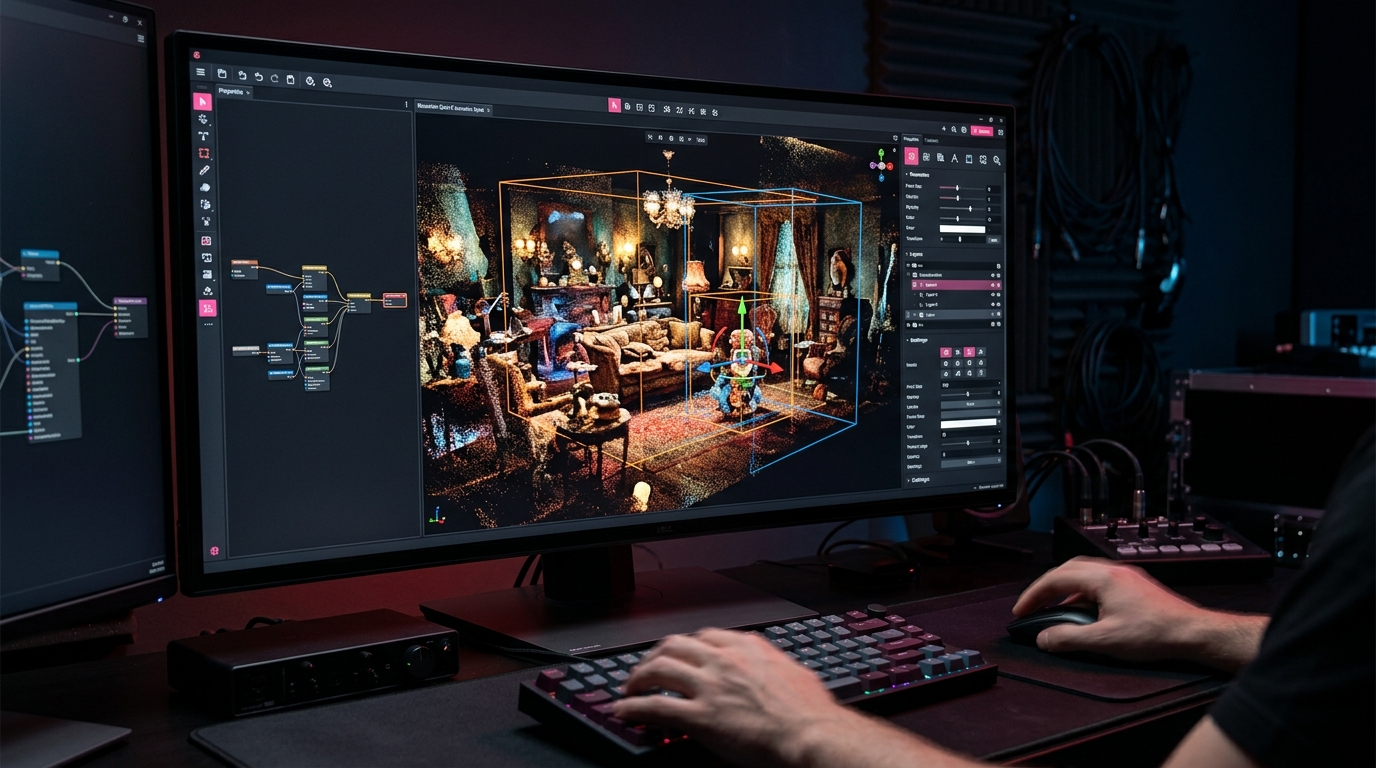
- DJI Terra: As of 2026, DJI Terra V5.0+ turns drone photos directly into high-quality Gaussian Splats.
- Mobile Capture: Apps like Luma AI and Polycam let creators scan places using standard smartphones.
- Editing Software: Tools like SuperSplat and SplatForge allow for powerful editing of 3D scenes.
Creators now have a complete pipeline from start to finish. They can use Luma AI for quick location scouts. They can refine the data using SplatForge. Finally, they can export the scene to OpenUSD for Unreal Engine. This smooth workflow saves studios countless hours.
Conclusion: Choosing Your Path in NeRF vs Gaussian Splatting
Building realistic digital worlds requires the right technology. Neural Radiance Fields paved the way for modern 3D capture. They remain useful for special archiving tasks.
However, 3D Gaussian Splatting is the clear future for modern studios. It offers unmatched real-time speed and native OpenUSD support. Therefore, virtual production teams should update their virtual production workflows to use these new tools.
Testing tools like SuperSplat and Polycam will help you master these formats. This will keep your studio competitive as you build your next digital twin.
Frequently Asked Questions
What is the main difference in nerf vs gaussian splatting?
NeRF uses neural networks to calculate light rays. This is accurate but very slow. 3D Gaussian Splatting uses millions of 3D shapes called splats. This allows for much faster, real-time rendering without a heavy neural network.
Can I capture 3D Gaussian Splats with my smartphone?
Yes. In 2026, mobile apps like Luma AI and Polycam let creators scan high-quality environments using standard smartphone cameras. This makes the tech very easy to use.
Is NeRF completely obsolete now?
No. 3D Gaussian Splatting is better for real-time speed. However, NeRF is still used in research, controlled studies, and archiving where tiny file sizes are needed.