
The Rising Stakes of Synthetic Media and AI Video Law
Imagine pouring millions of dollars into a groundbreaking, visually stunning commercial campaign. However, you might have it pulled from every major digital platform just hours before its global premiere. In the summer of 2026, this nightmare scenario is becoming a frequent reality. Consequently, enterprise studios must quickly adapt to the evolving landscape of ai video law. The technological leaps we have witnessed over the past few years have granted unprecedented capabilities to professional filmmakers. Additionally, they have introduced profound legal vulnerabilities.
Producing a commercial video today requires far more than just a compelling creative vision and a talented crew. Therefore, it demands a rigorous compliance guide and a deep understanding of international law. Studios must navigate overlapping commercial video regulations across different jurisdictions. They must balance artistic ambition with strict legal boundaries. Ignorance of these evolving frameworks is no longer a viable defense in any courtroom. As synthetic media becomes entirely indistinguishable from reality, global regulators are cracking down with unprecedented force. Enterprise video teams face a ticking clock to update their workflows. Consequently, mastering these legal frameworks is absolutely essential for long-term survival. This article provides the definitive roadmap for navigating these turbulent legal waters and keeping your productions on the screen.
The EU AI Act and AI Video Law
The global regulatory landscape shifted dramatically when the EU AI Act became fully enforceable in mid-2026. This sweeping legislation transformed enterprise AI compliance from an optional best practice into a strict legal mandate. The Act categorizes AI systems by risk level. Therefore, it places different burdens on creators depending on the tools they use. For filmmakers and advertising agencies, AI-generated video usually falls under the “limited risk” category. This classification might sound lenient. However, it still requires strict transparency protocols that fundamentally alter post-production workflows.
Understanding Transparency Requirements
Studios operating within or distributing to the European market must clearly label synthetic content. This ensures that viewers are never deceived. Additionally, integrating C2PA provenance standards directly into your media pipelines is the most effective way to meet this requirement. Failing to provide this technical transparency risks massive fines that can easily cripple a production company. Furthermore, enterprise AI tools must maintain comprehensive documentation of their training data. This ensures creators do not accidentally infringe on existing copyrights or utilize unlicensed likenesses.

Professional video editors must integrate metadata tracking into their daily workflows to maintain a pristine chain of custody. To achieve this level of compliance, studios should enforce several non-negotiable rules on the cutting room floor:
- Embed durable digital watermarks in all final video exports before distribution.
- Maintain detailed, timestamped logs of all AI prompts and generation parameters used during production.
- Verify the commercial licensing and training data compliance of all underlying base models.
The EU AI Act essentially forces studios to treat digital metadata with the same reverence as physical camera lenses. Meanwhile, a ticking clock surrounds every European distribution deal. Therefore, legal teams must secure and verify all provenance data long before hitting the publish button.
US Copyright Law and AI Video Law
While Europe focuses heavily on consumer transparency, US Copyright Law presents a completely different challenge. This challenge centers around intellectual property protection. Specifically, the primary concern for American studios is ensuring they actually own the lucrative assets they are creating. However, the US Copyright Office maintains a strict, unwavering stance on authorship. It dictates that algorithms and machines cannot hold copyrights. Consequently, enterprise studios face a critical financial hurdle when trying to protect content generated largely by artificial intelligence.
Establishing Human Creative Contribution
According to a comprehensive 2026 report by YOPRST, simply paying for an enterprise platform subscription does not automatically grant full copyright ownership. Therefore, studios must prove substantial human creative contribution to secure a copyright registration. Securing IP protection requires directors and editors to document their creative process meticulously. This proves that the machine was merely a tool guided by human ingenuity.

A structured, documented, human-reviewed production workflow is absolutely necessary to establish creative contribution. Under current US law, typing a descriptive prompt into a text box is never enough to claim authorship (YOPRST, 2026). Instead, creators must modify the AI-generated video significantly to transform it into a protectable work. Therefore, consider implementing these essential post-production steps to solidify your copyright claims:
- Apply extensive color grading, masking, and customized visual effects to the raw generated footage.
- Combine synthetic clips with traditional live-action footage to create a hybrid production.
- Edit the timeline intricately to create a unique, human-driven narrative structure.
Consequently, video editors must act as traditional directors and compositors rather than just machine operators. This vital distinction separates unprotectable machine outputs from the valuable intellectual property assets that sustain enterprise studios.
State Laws and the FTC Framework
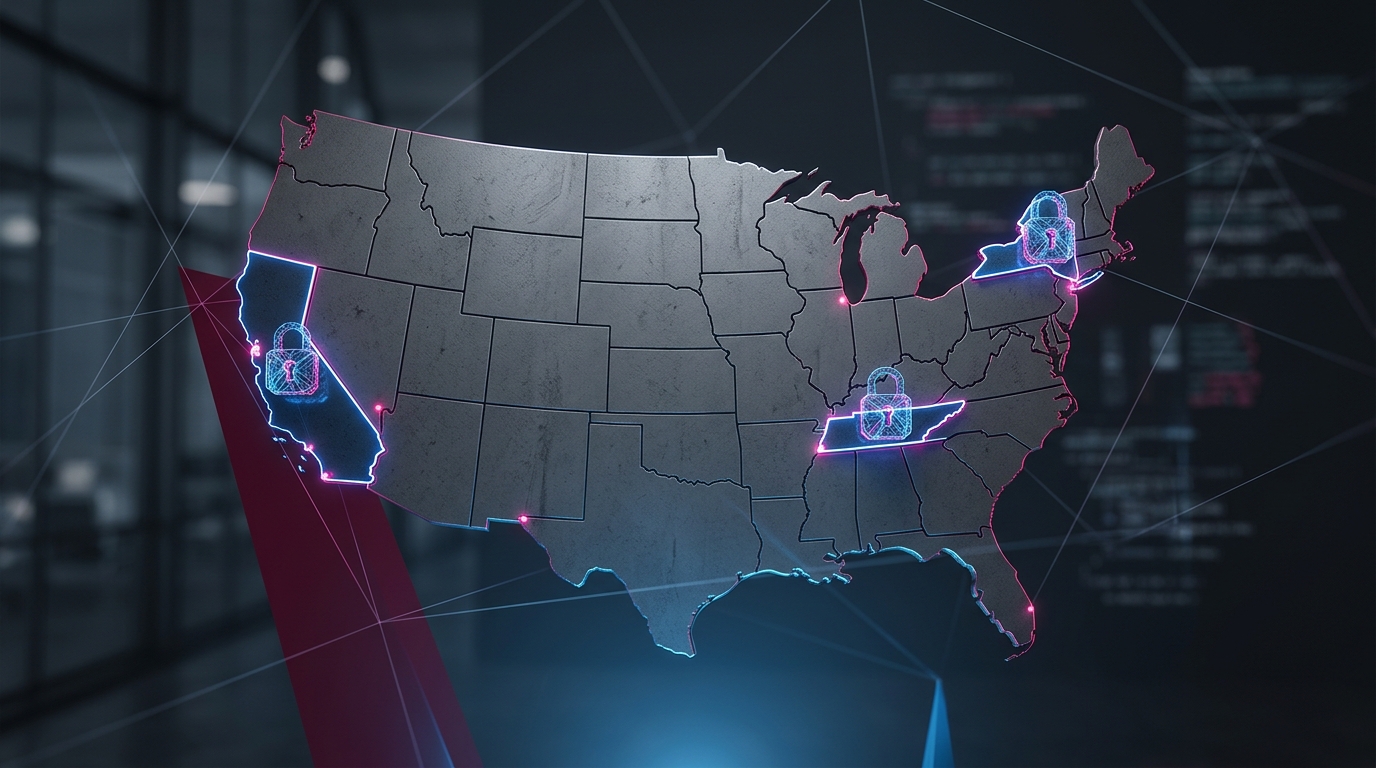
Beyond the broad strokes of federal law, filmmakers must navigate a complex web of state-level regulations. This fragmented patchwork of rules heavily complicates national ad campaigns. Consequently, it turns a simple media buy into a logistical puzzle. For example, a single AI video ad promoted across multiple states can trigger New York’s synthetic performer disclosure rules. Additionally, it can trigger California’s stringent AB 2602 performer consent framework (YOPRST, 2026). Therefore, navigating this requires a dedicated legal review for almost every major geographic market.
Biometrics and Platform Rules
Specific states have begun targeting distinct elements of digital identity to protect their citizens. For instance, Tennessee’s ELVIS Act provides robust, specific protections for vocal synthesis and voice cloning. Meanwhile, Illinois’s BIPA governs strict biometric obligations in AI productions (YOPRST, 2026). Consequently, utilizing a synthetic performer or cloning an actor’s likeness requires rigorous, documented legal clearance from all relevant parties.
The Federal Trade Commission (FTC) framework also strictly regulates deceptive advertising practices in the synthetic era. Brands cannot mislead consumers about the synthetic nature of a product demonstration. This is especially true when depicting the efficacy of a physical good. Additionally, adhering to evolving platform disclosure rules is just as critical as following government regulations. According to YOPRST (2026), major platforms like YouTube, TikTok, and Meta have distinct, rapidly updating disclosure rules. Violating these terms of service can result in immediate account termination.
Grounding Risk in Data and Statistics
Examining the data driving these massive policy shifts reveals just how precarious the current landscape is. Enterprise legal risks have skyrocketed throughout 2026 as enforcement agencies catch up to the technology. According to a 2026 industry survey, 73% of enterprise studios faced compliance audits regarding their AI pipelines recently.
The financial stakes attached to these audits are massive. For example, non-compliance with the EU AI Act can result in devastating fines up to 7% of global turnover. Furthermore, a recent 2026 YOPRST study found that 45% of AI-generated commercial videos failed initial platform disclosure checks during upload. These flagged videos faced immediate demonetization, shadowbanning, or outright removal. Consequently, these actions severely damaged the associated marketing campaigns. Therefore, investing heavily in automated compliance software and legal consultation is statistically a sound financial decision for any modern studio.
Visual and Infographic Concept
To simplify these dense and overlapping concepts, enterprise teams should design a cross-border compliance flowchart. This visual aid must map the EU AI Act’s metadata requirements directly against US Copyright Law’s human contribution thresholds. Meanwhile, it should also highlight state-specific red flags. Distributing this infographic will guide legal teams, marketers, and editors through safe distribution workflows. Consequently, everyone will understand the stakes.
Securing Your Studio’s Future Under AI Video Law
The legal landscape for AI video is undeniably complex. However, it remains entirely navigable for teams willing to adapt. Prioritizing enterprise AI compliance under the strict EU AI Act will protect your global distribution channels. Additionally, securing your IP protection by heavily documenting your human creative contribution will ensure your assets retain their financial value. Respecting state laws like AB 2602 and the ELVIS Act will shield your studio from costly lawsuits.
The 2026 compliance deadline is a ticking clock for enterprise studios worldwide. Therefore, you absolutely cannot afford to ignore these commercial video regulations while your competitors adapt and thrive. We urge legal and marketing teams to audit their production pipelines immediately. Furthermore, you should implement strict platform disclosure protocols today. Taking these proactive steps will effectively protect your studio’s creative assets and secure your place in the future of entertainment.
Frequently Asked Questions
What is the most important step for EU AI Act compliance in video production?
The most critical step is ensuring transparency through metadata. Studios must implement C2PA provenance standards to clearly label synthetic content and maintain detailed logs of AI prompts and training data.
Can I copyright a video generated entirely by an AI prompt?
No. Under US Copyright Law, algorithms cannot hold copyrights. You must prove substantial human creative contribution, such as extensive editing, color grading, and combining synthetic media with live-action footage.
What happens if my AI commercial violates state laws like California’s AB 2602?
Violating state-specific synthetic media laws can result in severe legal penalties, including right-of-publicity lawsuits, injunctions against your campaign, and massive financial damages. You must secure documented legal clearance for any synthetic performers.
Why are my AI videos getting shadowbanned on social platforms?
Major platforms like YouTube and TikTok have strict disclosure rules for AI-generated content. If you fail to use their built-in synthetic media labels or violate their deceptive content policies, your videos risk immediate demonetization or shadowbanning.