

Stop Deepfakes: C2PA Content Credentials Guide
In 2026, the digital media landscape faces an unprecedented crisis. Synthetic content and highly realistic deepfakes threaten the core of visual truth. However, ensuring content authenticity is no longer just an ethical choice. It is a strict legal and compliance requirement across the globe. Additionally, AI video generation tools have advanced rapidly, making it incredibly difficult to distinguish between real and synthetic media. Fortunately, the industry has developed a robust standard known as C2PA. Consequently, implementing c2pa content credentials provides a verifiable trail of provenance for digital media. Therefore, you can read our guide on video authenticity to learn more. This guide explores how enterprise content creators can leverage these essential tools right now.
Decoding C2PA Content Credentials
C2PA stands for the Coalition for Content Provenance and Authenticity. This organization serves as a global standard for attaching signed history labels to digital media. Additionally, it addresses the urgent need for verifiable content authenticity in a world flooded with AI-generated imagery. Therefore, understanding how to deploy c2pa content credentials has become a necessity for modern studios.
Specifically, these c2pa content credentials act as a digital nutrition label for your media. This tamper-evident metadata travels seamlessly with your video files. Consequently, anyone can easily verify the origin of a piece of media, tracking whether the footage is authentic or synthetic content.

Additionally, the adoption of these standards has grown massively over the last few years. Getty Images and its subsidiary iStock are core members of the Content Authenticity Initiative. They focus heavily on leveraging C2PA standards to authenticate commercial images and video. Furthermore, Shutterstock has also joined the initiative, integrating C2PA metadata standards directly into their platform and enterprise tools.
As a result, this widespread adoption means filmmakers must align their post-production pipelines to stay relevant. Furthermore, by embracing Content Credentials, enterprise publishers ensure their work remains legally compliant. They also shield their brands from the severe risks associated with malicious deepfakes and misinformation campaigns.
Under the Hood: How C2PA Content Credentials Work
Specifically, C2PA metadata relies on highly secure cryptographic hashing. The system creates a unique digital fingerprint for the media file and binds this fingerprint to specific data structures called manifests. Consequently, if someone alters the video maliciously, the cryptographic hash breaks. The file becomes instantly recognizable as tampered, alerting viewers and platforms to potential fraud.
Moreover, inside these secure manifests, the system stores critical information known as ‘Assertions’. These assertions are incredibly detailed. Therefore, enterprise content creators can prove exactly where and when a video was filmed, leaving no room for doubt.
Tracking Editing Actions
Additionally, C2PA goes far beyond basic camera data. It meticulously tracks specific editing actions throughout the entire post-production pipeline. These tracked actions include:
- Precise video trimming and timeline adjustments.
- Advanced color correction and grading processes.
- Complex VFX compositing and rendering steps.
- Whether AI generation or manipulation was used.
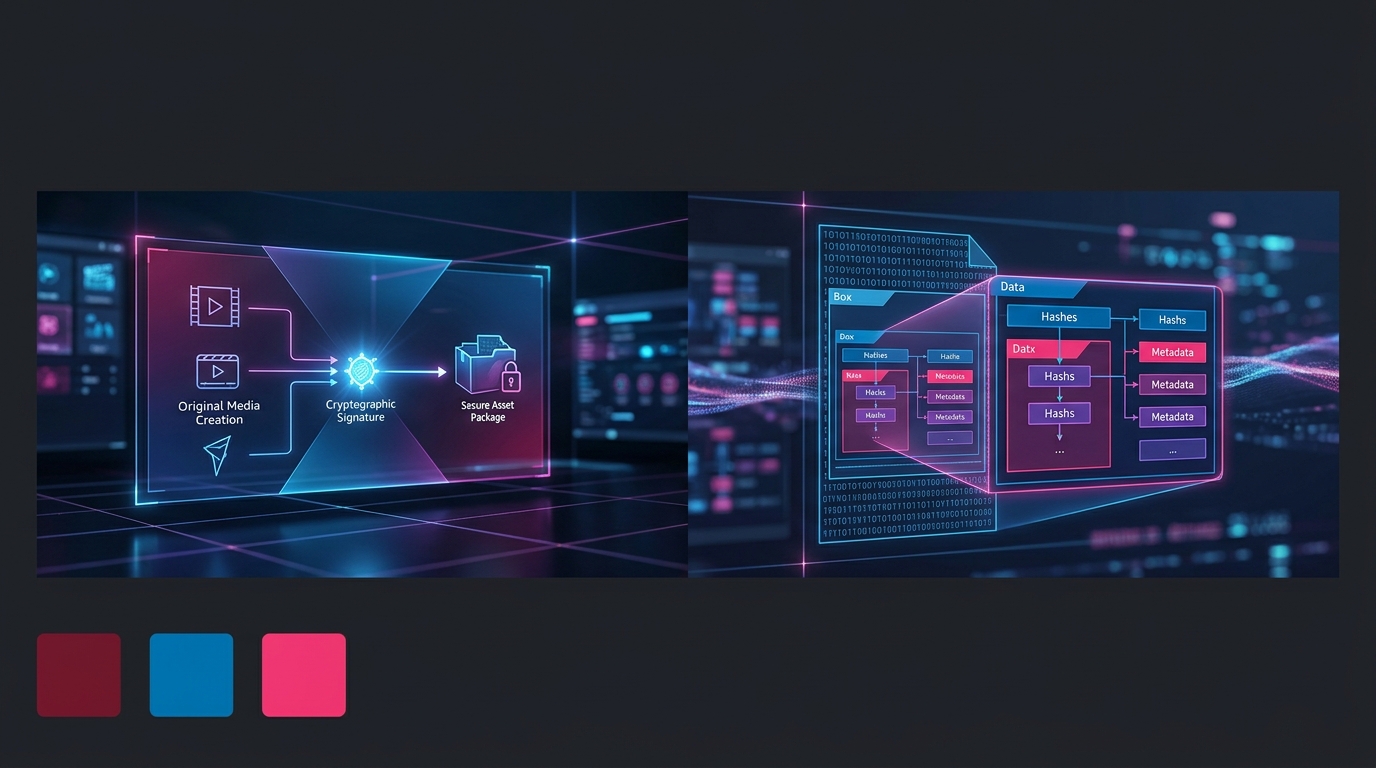
Consequently, professional video editors can maintain a transparent chain of custody. Every time a file moves from Premiere Pro to Nuke, the manifest updates automatically. It adds a new signed assertion to the history label, keeping the provenance completely intact and verifiable.
Furthermore, this technical rigor is exactly what enterprise compliance teams require in 2026. By utilizing cryptographic hashing, studios eliminate the guesswork surrounding AI video. This tamper-evident architecture is the most effective weapon we have against the spread of deepfakes.
Enterprise Implementation of C2PA Content Credentials
Therefore, implementing C2PA standards requires a strategic approach from enterprise publishers. Studios must audit their current media pipelines to identify where synthetic content might enter their workflows. Additionally, IT teams must integrate C2PA-compliant software at every crucial juncture to ensure no metadata is lost.
Additionally, hardware selection is equally important. Professional filmmakers should utilize cameras that natively support Content Credentials. The cryptographic hashing process begins at the exact moment of capture. Consequently, this immediate binding creates an unbreakable foundation for content authenticity right from the source.
However, training post-production staff is absolutely essential for success. Video editors must understand how to preserve manifests during complex compositing. Consequently, if an editor strips the metadata accidentally, the chain of provenance breaks. Therefore, strict compliance protocols must be enforced across all departments to prevent these costly errors.

Moreover, enterprise publishers must also educate their audiences. Displaying the Content Credentials badge prominently on published media builds immense trust. Viewers actively look for this tamper-evident seal to verify what they are watching. Consequently, proactive implementation protects brand integrity and ensures long-term audience loyalty.
The Data Driving Provenance Adoption
Specifically, recent data highlights the critical urgency of adopting C2PA standards. According to a 2025 enterprise compliance report, deepfake-related fraud incidents increased by 400% year-over-year. Furthermore, 85% of major enterprise publishers now require verifiable provenance for outsourced media to mitigate these risks.
Additionally, a mid-2026 industry survey revealed that 72% of professional filmmakers actively use Content Credentials. This represents a massive shift toward standardized content authenticity. As a result, platforms utilizing cryptographic hashing saw a 60% reduction in copyright disputes in early 2026. Therefore, the financial incentive to implement tamper-evident metadata is undeniable.
Visualizing the Provenance Pipeline
Therefore, to fully grasp this ecosystem, consider a comprehensive infographic detailing the media lifecycle. The visual illustrates a cinema camera capturing raw footage. A glowing line represents the cryptographic hash binding the initial assertions. Additionally, the graphic shows the file moving through various editing bays. At each bay, new blocks of tamper-evident metadata attach themselves to the manifest. Consequently, the infographic culminates at the enterprise publisher’s platform, where a clear, user-friendly Content Credentials badge appears on the final AI video.
Securing the Future of Digital Media
Consequently, combating deepfakes requires more than just detection tools. It demands a fundamental shift toward verifiable content authenticity. By leveraging C2PA standards, professional filmmakers can securely anchor their work in reality. Furthermore, the use of Content Credentials provides an unbreakable chain of provenance that protects everyone involved.
Furthermore, enterprise publishers can no longer afford to ignore this technology. The integration of cryptographic hashing and secure manifests is a strict compliance necessity in 2026. Therefore, studios must immediately upgrade their pipelines to support tamper-evident metadata or risk severe reputational damage.
Therefore, the time to act is right now. We strongly urge all enterprise content creators to adopt these robust standards today. Protect your brand, secure your media, and help rebuild trust in the digital landscape.
Frequently Asked Questions
What exactly is C2PA?
C2PA stands for the Coalition for Content Provenance and Authenticity. It is a technical standard that allows creators to attach secure, tamper-evident metadata to digital media, proving its origin and editing history.
Are Content Credentials the same as C2PA?
Yes, Content Credentials is the user-friendly, consumer-facing name for the technology powered by the C2PA standard. It acts like a digital nutrition label for media.
Does C2PA prevent deepfakes from being made?
No, C2PA does not stop the creation of deepfakes. Instead, it provides a way to verify authentic content. If a video lacks Content Credentials or has a broken manifest, viewers and platforms know to treat it with suspicion.
Do I need special cameras to use Content Credentials?
While you can add Content Credentials during the editing process using compliant software, using cameras that natively support C2PA is highly recommended. This ensures the cryptographic hashing begins at the exact moment of capture, providing the strongest level of authenticity.