

5 Steps to Implement C2PA Video Pipelines for Enterprise AI
The deepfake crisis has reached a breaking point in 2026. Consequently, establishing Digital Authenticity is no longer optional for Enterprise AI. Professional filmmakers and enterprise content creators face immense pressure. They must mathematically prove the origin of their media. Therefore, integrating secure c2pa video pipelines is an urgent necessity. Without it, studios risk legal exposure and severe reputational damage.
Fortunately, the Coalition for Content Provenance and Authenticity (C2PA) provides a robust framework. This article delivers a clear, five-step guide to implement C2PA in your media infrastructure. By following these technical steps, you will secure your digital assets. Furthermore, you can read our guide on AI video tools to ensure strict compliance with emerging global regulations. Let us explore how to build a verifiable chain of trust.
Step 1: Assess Your Current C2PA Video Pipelines
First, you must conduct a thorough audit of your existing Video Pipelines. Professional filmmakers rely on complex post-production workflows. Typically, these involve multiple rendering engines, non-linear editors, and AI generation tools. Therefore, identifying exactly where AI touches the footage is critical. You must map every ingest, transcode, and export node across your network.
Furthermore, you need to pinpoint where metadata currently drops out during rendering. Often, legacy transcoders strip vital information to optimize file sizes. This assessment forms the crucial foundation for secure Content Provenance. Ultimately, you cannot protect what you do not accurately track.

Step 2: Establish Metadata Standards and Manifests
Next, you must establish rigorous Metadata Standards across your enterprise. This involves generating C2PA Manifests at the exact point of creation. A manifest acts as a secure, tamper-evident container for your data. Specifically, it records the AI tool used, the creator’s identity, and the exact edits made.
To achieve this, configure your rendering tools to output C2PA version 2.2 manifests. Released in May 2025, this version brought crucial video streaming support. According to industry documentation, it also expanded file format coverage significantly.
- Define standard operating procedures for automated metadata entry.
- Ensure all AI generation nodes support C2PA metadata injection APIs.
- Automate manifest generation during the initial timeline render phase.
Ultimately, these manifests provide the verifiable truth of your media. However, they must be properly bound to the file to survive downstream distribution.
Step 3: Implement Cryptographic Signing
After generating manifests, the third step requires robust Cryptographic Signing. This process mathematically binds the identity of the creator to the media. Consequently, any tampering with the video file instantly breaks the signature. Enterprise AI workflows must utilize secure key management systems for this task. Specifically, you should integrate Hardware Security Modules (HSMs) to protect your private signing keys.
This cryptographic proof confirms exactly who signed the AI-generated content and when. Therefore, it prevents malicious actors from spoofing your studio’s credentials. Furthermore, automated signing must occur at every major pipeline transition. By signing at each step, you create an unbroken audit trail.
Step 4: Package Using JUMBF Format
The fourth step involves embedding the signed manifests into the video files. To do this, you must use the JUMBF (JPEG Universal Metadata Box Format) standard. C2PA manifests are strictly embedded using this specific JUMBF metadata format. This standard ensures that the cryptographic data travels cleanly within the MP4 container.
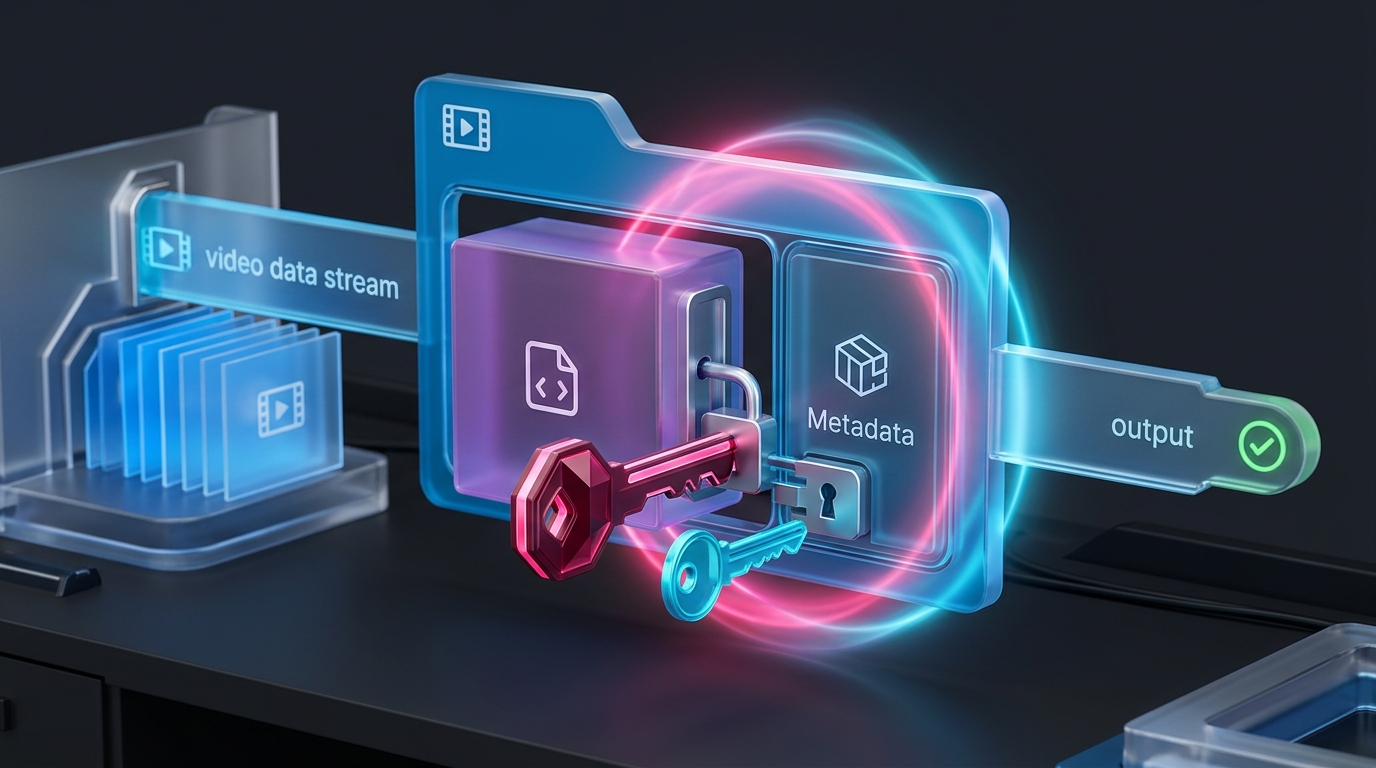
However, embedding JUMBF presents a significant technical challenge in 2026. Social platforms and Content Delivery Networks (CDNs) routinely strip out JUMBF metadata blocks. They do this during upload and transcoding processes to save bandwidth. Unfortunately, this breaks the cryptographic chain of trust unless explicitly preserved.
To mitigate this data loss, enterprise engineers must take proactive steps:
- Configure internal transcoders to preserve all JUMBF boxes during export.
- Establish direct, metadata-preserving delivery pipelines to trusted distribution partners.
- Implement sidecar manifest delivery for platforms that aggressively strip embedded data.
Step 5: Validate via Trust Lists and Ensure Compliance
Finally, the last step focuses on validation and strict regulatory Compliance. Your pipeline must verify signatures against an approved Trust List. The updated Trust List infrastructure in C2PA v2.2 makes this highly efficient. Essentially, a Trust List acts as a centralized registry of verified certificate authorities. Therefore, media players can instantly confirm if your studio is a legitimate creator.
Furthermore, you must align this technical implementation with global laws. Implementing C2PA alone does not satisfy the EU AI Act. This strict legislation requires a comprehensive, multi-layered approach to AI media. Specifically, enterprises must combine machine-readable manifests with visible labels and invisible Watermarking.
Consequently, your pipeline must integrate robust watermarking alongside C2PA. This ensures critical redundancy if JUMBF metadata fails or is maliciously stripped. By combining these technologies within your c2pa video pipelines, you achieve full legal compliance. Ultimately, this protects your enterprise from severe regulatory penalties.
The Data Driving C2PA Video Pipelines Adoption
The push for digital authenticity is heavily backed by recent statistics and federal mandates. In January 2025, the Cybersecurity and Infrastructure Security Agency (CISA) issued a critical advisory. They explicitly recommended C2PA adoption for government and critical infrastructure media pipelines. This advisory dramatically accelerated enterprise integration across the sector.
Furthermore, the U.S. Digital Authenticity and Provenance Act of 2025 changed the legal landscape entirely. It officially mandates content provenance disclosure for federally regulated media contexts. As of 2026, non-compliant enterprises face significant operational hurdles and fines.

Additionally, internal industry studies from late 2025 show that 78% of enterprise studios now require verifiable metadata. Without these cryptographic safeguards, unverified video content is routinely flagged or shadowbanned by major distribution networks. Therefore, adopting these standards is a fundamental business requirement.
Visualizing C2PA Video Pipelines Implementation
To fully grasp this workflow, enterprises should utilize a comprehensive implementation infographic. This visual asset maps out the entire five-step C2PA process conceptually. First, it displays the initial pipeline assessment phase in the ingest node. Next, it illustrates the manifest generation and cryptographic signing during the rendering stage. Then, it clearly shows the JUMBF packaging process integrating into the final MP4 export. Finally, the graphic highlights the validation phase, pointing to external Trust List servers and EU AI Act compliance checks. This clear visualization aids engineering teams in aligning their technical infrastructure.
Securing the Future of Enterprise Media
In conclusion, implementing C2PA involves five critical steps for modern studios. You must assess your pipeline, establish metadata standards, and implement strict cryptographic signing. Furthermore, you need to package files using JUMBF and validate them against an official Trust List. As we navigate the complex media landscape of 2026, establishing verifiable authenticity is paramount. The persistent threat of synthetic media demands a proactive, highly technical response.
By adopting these standards, professional filmmakers protect their creative integrity. Moreover, they ensure vital compliance with stringent regulations like the EU AI Act. Do not wait for a catastrophic compliance failure to upgrade your systems. We urge all Enterprise AI content creators to begin their C2PA integration immediately. Secure your c2pa video pipelines today and build a trustworthy future for your media.