
Mastering C2PA: Secure Enterprise AI Video Compliance
The year 2026 has brought unprecedented challenges to media authenticity. Deepfakes and highly realistic AI-generated videos threaten brand trust. Consequently, achieving strict c2pa compliance is no longer optional. Professional filmmakers and enterprise content creators face immense pressure to verify their assets. Without strict protocols, legal risks multiply rapidly.
Therefore, mastering the Coalition for Content Provenance and Authenticity (C2PA) framework is essential. This comprehensive guide explores how to secure your media pipelines. We will dive deep into AI provenance and technical metadata injection. Furthermore, we will outline how to achieve seamless digital asset management integration.
By implementing these cryptographic standards, you protect your digital assets from malicious tampering. Ultimately, this ensures your media remains tamper-evident and legally sound in a volatile digital landscape.
The Core of C2PA Compliance and AI Provenance
To achieve true AI video c2pa compliance, studios must understand foundational metadata frameworks. The C2PA specification has now progressed to version 2.0. This update provides the vital cryptographic layer that makes metadata declarations tamper-evident and verifiable. According to a November 2025 report by Numonic.ai, this standard acts as a digital seal of authenticity.
Integrating IPTC Standards
Alongside C2PA, the IPTC Photo Metadata Standard 2025.1 plays a crucial role. Ratified in November 2025, this standard introduced four new XMP fields. Specifically, these fields track AI-generated and AI-assisted content throughout the production pipeline. Thus, creators can embed transparent AI provenance directly into their media files.
However, consumer tools currently lag behind these strict enterprise standards. For instance, Midjourney produces images with absolutely no AI provenance metadata. It completely lacks both IPTC AI fields and a C2PA manifest. Similarly, OpenAI C2PA implementation remains highly inconsistent. OpenAI implemented C2PA in some APIs, but standard DALL-E outputs still lack proper IPTC AI fields.

Therefore, professional video editors cannot rely on native generation tools for compliance. Instead, they must utilize advanced enterprise video tools to enforce rigorous, standardized metadata rules. By combining IPTC 2025.1 tags with a C2PA cryptographic manifest, studios establish an unbreakable chain of custody. Consequently, this secures your entire media workflow against unauthorized manipulation.
Technical Deep Dive: Metadata Injection for C2PA Compliance
Securing video assets requires precise, automated metadata injection. Standard AI generators often fail to provide enterprise-grade content credentials out of the box. For example, open-source models like Stable Diffusion and ComfyUI handle data poorly. They embed workflow data into PNG tEXt chunks rather than standard IPTC XMP format. Consequently, standard compliance tools cannot read this data without complex translation layers.
The Mechanics of Cryptographic Manifests
To solve this, technical teams must build robust metadata injection pipelines. First, the system must extract the raw generation data. Next, it translates this data into standard XMP fields. Finally, it binds the information using a cryptographic manifest. This manifest acts as a secure wrapper around the media file. If a bad actor alters a single frame, the cryptographic signature instantly breaks.
Video C2PA Compliance Challenges
Video adds another layer of technical complexity. While C2PA video support exists in the technical specification, implementation remains rare. As of November 2025, consumer tools do not natively support C2PA for video. Therefore, enterprise studios must rely on automated post-generation metadata injection.

Here is how a compliant workflow functions:
- The AI model generates the raw video asset.
- An automated script extracts the generation parameters.
- The system maps this data to IPTC 2025.1 XMP fields.
- A secure server injects the cryptographic manifest into the header.
Ultimately, this pipeline guarantees that every video file remains tamper-evident. By automating this process, professional filmmakers save time while ensuring strict legal compliance. Without this step, your enterprise remains vulnerable to deepfake allegations and severe regulatory penalties.
Enterprise DAM Integration for C2PA Compliance
Standalone metadata injection is only half the battle. True enterprise compliance requires seamless digital asset management (DAM) integration. Modern studios manage petabytes of video content daily. Therefore, your digital asset management system must automatically read, verify, and display C2PA content credentials.
Building a Compliant Pipeline
First, audit your existing DAM infrastructure. Many legacy systems strip metadata during the ingestion process. Obviously, this destroys the cryptographic manifest and breaks the chain of custody. To prevent this, IT teams must configure the DAM to preserve all XMP fields. Furthermore, the system should flag any incoming asset that lacks proper AI provenance.
Automated Verification Protocols
Next, integrate automated verification protocols directly into your DAM integration strategy. When an editor uploads a video, the system must instantly validate the C2PA signature.
Consider the following integration steps:
- Update your DAM software to support C2PA version 2.0 standards.
- Configure ingestion rules to reject files missing a cryptographic manifest.
- Train your video editors to utilize verified assets exclusively.

By enforcing these rules, enterprises create a secure, closed-loop environment. Consequently, external audits become simple and straightforward. Your legal team can easily prove the origin of every frame. Ultimately, a fully integrated DAM ensures your brand remains protected against the rising tide of AI-generated misinformation.
The Data Driving AI Video Compliance
The push for rigorous enterprise c2pa compliance is driven by alarming industry data. As of November 2025, studies from Numonic.ai highlighted massive gaps in AI transparency. For example, 100% of native Midjourney metadata lacks both IPTC AI fields and C2PA manifests. Furthermore, while OpenAI C2PA adoption exists in some APIs, standard DALL-E outputs still omit critical IPTC fields.
Additionally, the threat of deepfakes has accelerated the adoption of the IPTC Photo Metadata Standard 2025.1. With four new XMP fields dedicated to AI content, enterprises finally have a standardized tracking method. However, consumer video tools lack native C2PA support. Therefore, secure enterprise video currently requires 100% post-generation metadata injection. Consequently, these statistics prove that proactive DAM integration is absolutely critical for modern studios.
Visualizing the C2PA Workflow
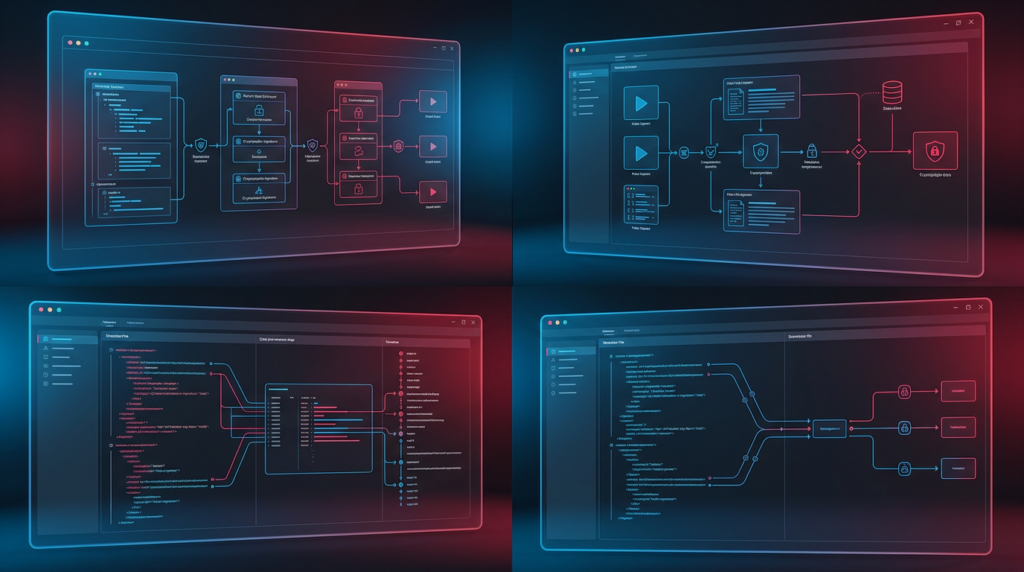
To fully grasp this process, imagine a comprehensive infographic detailing the C2PA workflow. At the top, an AI generator creates a raw video file. Next, an arrow points downward to a “Metadata Injection” module. Here, a gear icon represents the translation of raw data into standardized XMP fields.
Subsequently, the flow moves to the “Cryptographic Manifest” stage, symbolized by a digital padlock. Finally, the secured asset flows into an enterprise digital asset management system. The infographic concludes with a green “Verified” badge. This visual perfectly illustrates how raw AI outputs transform into legally sound, tamper-evident media.
Securing Your Media Future
In conclusion, mastering C2PA is no longer a futuristic concept. It is an immediate requirement for secure enterprise AI video compliance. As we navigate the deepfake threats of 2026, professional filmmakers must prioritize AI provenance. By leveraging the IPTC 2025.1 standard and implementing robust metadata injection, you protect your digital assets.
Furthermore, successful DAM integration ensures that your cryptographic manifests remain intact and tamper-evident. Do not rely on inconsistent consumer tools for enterprise security. Instead, take control of your content credentials today. We strongly urge enterprise content creators to audit their current workflows immediately. Upgrade your digital asset management systems, enforce strict XMP field protocols, and secure your media pipelines. Act now to safeguard your brand’s authenticity and trust.