
Master LoRA Training for Video Character Continuity
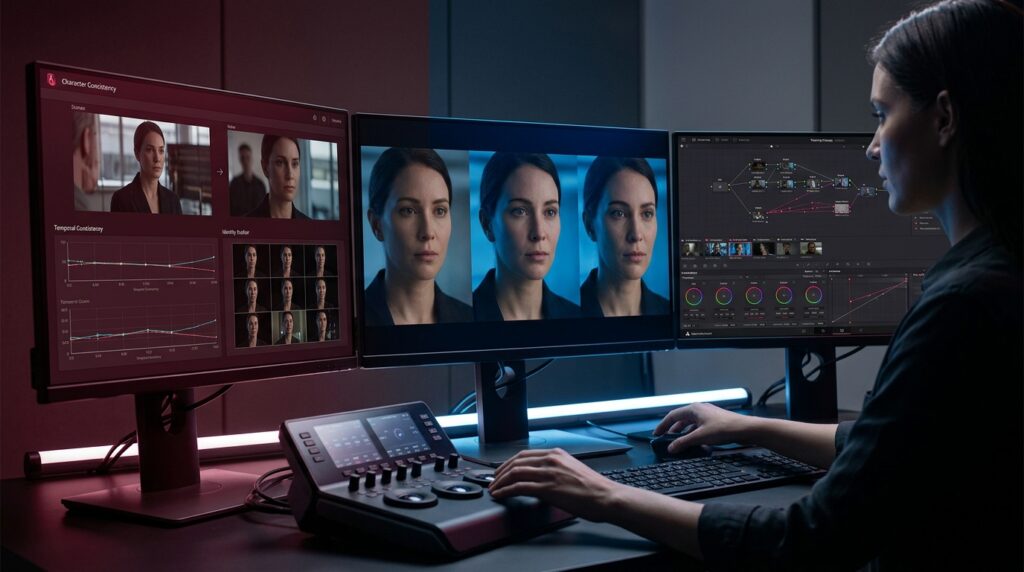
However, temporal consistency remains the biggest hurdle in enterprise AI filmmaking in 2026. Post-production teams frequently struggle with flickering faces and shifting identities, which causes video character continuity to break down across different camera angles. Therefore, Low-Rank Adaptation (LoRA) provides a robust solution to this ongoing challenge. By utilizing LoRA training, studios can lock down a character’s exact appearance and maintain strict visual compliance throughout an entire production. Consequently, this technique ensures that digital actors look identical from shot to shot, establishing reliable video character continuity. In this comprehensive guide, we will explore the technical workflows required to achieve flawless visual continuity, empowering your studio to integrate AI into strict commercial pipelines through efficient dataset preparation and custom model deployment.
Understanding Video Diffusion and Video Character Continuity
Traditional image-first models like Stable Diffusion and Flux often struggle with video generation because they treat footage as a sequence of isolated images, lacking true temporal awareness. However, Native Video Diffusion Models were developed to solve this exact architectural flaw. LTX, for example, is designed as the first open-source video generation model built specifically for native LoRA fine-tuning. Consequently, LTX operates directly on native video data, which vastly improves temporal consistency.
Additionally, LoRA works by freezing the massive base model weights and injecting small, trainable rank decomposition matrices into the neural network. This targeted approach requires significantly less computational power while preventing catastrophic forgetting within the base model. Therefore, enterprise studios can now train specific character identities without breaking the model’s fundamental understanding of physics and motion.
The Shift to Native Video Data
Furthermore, in 2026, training directly on video data has become the gold standard for the industry. This method teaches the AI how light and shadows interact over time, dramatically improving overall motion quality. Consequently, fine-tuning on reference footage allows the generation of videos where a character maintains a precise, unwavering appearance across different scenes, angles, and lighting conditions to secure video character continuity. Filmmakers can finally trust AI outputs for commercial use, as native LoRA fine-tuning successfully bridges the gap between experimental generation and professional filmmaking.
Data Preparation for Video Character Continuity
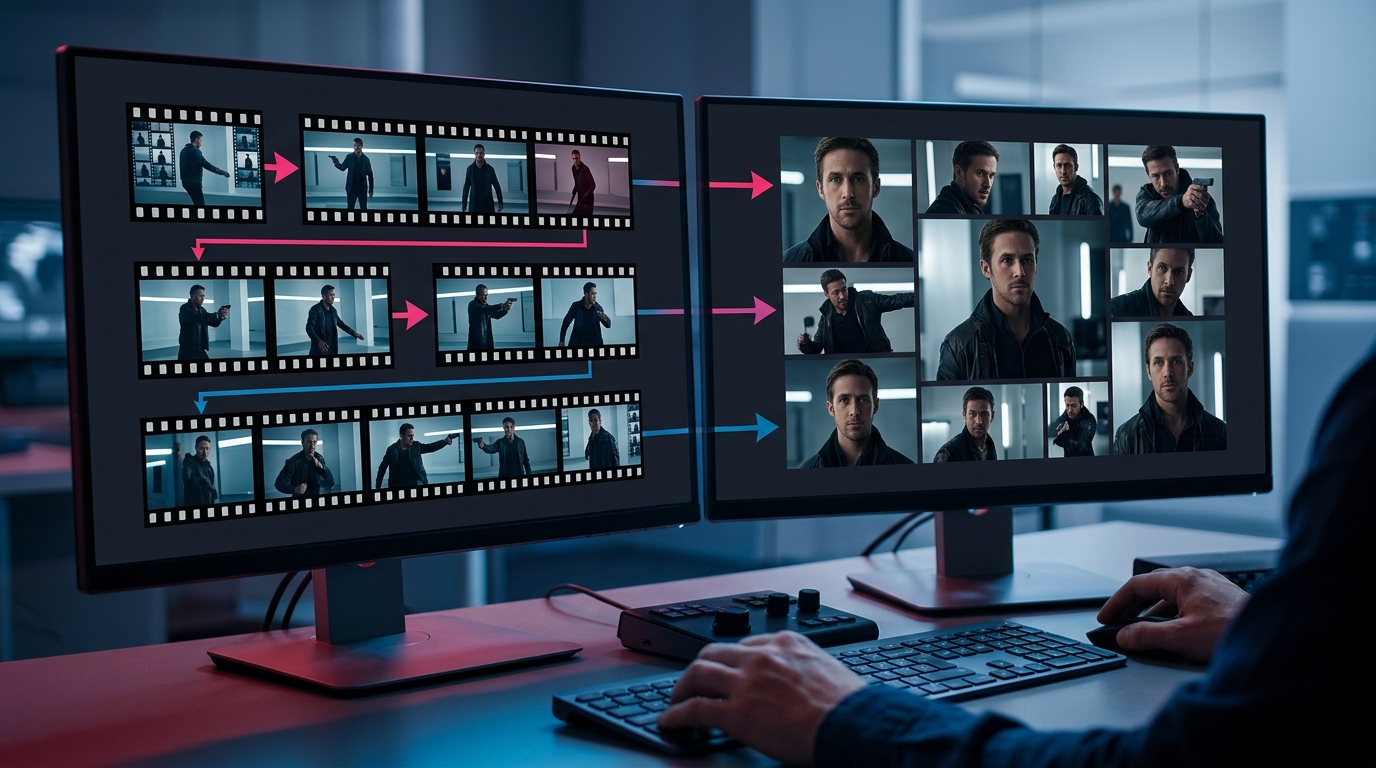
Proper data preparation is the foundation of successful LoRA training. First, the process begins by gathering high-quality reference footage that encompasses a wide variety of lighting conditions and focal lengths. Because enterprise compliance requires clearing all training data for copyright, studios must maintain strict logs of their reference imagery. Additionally, investing time in curating pristine data directly translates to superior video character continuity.
After gathering your assets, crop and scale the footage to match the model’s native resolution. Therefore, frame extraction should prioritize diverse angles so the model can learn the character’s complete facial geometry. When the AI understands a subject in three dimensions, temporal consistency remains stable even during complex camera movements.
Executing the Training Run
With a prepared dataset, the fine-tuning process can begin. Start by configuring your learning rate carefully; however, a lower learning rate is generally recommended to prevent overfitting. Define your training steps based on the size of your dataset and keep a close eye on validation loss, saving checkpoints at regular intervals.
Consequently, testing these checkpoints is crucial for ensuring high motion quality. Generate test videos at different training intervals to pinpoint the exact epoch where character continuity peaks. Following this rigorous fine-tuning workflow is the best way to guarantee professional-grade results.
Inference and Deployment Strategies
Once training is complete, your deployment strategy becomes the primary focus. Fortunately, LoRA weights trained via LTX are fully compatible with industry-standard tools. They can be easily loaded into Hugging Face diffusers and ComfyUI workflows, making integration into existing post-production pipelines incredibly seamless. Therefore, studios must then weigh the benefits of cloud versus local deployment to maintain video character continuity efficiently.
To successfully deploy your trained models, consider these core options:
- Local Inference: Ensures strict data privacy on-premises for sensitive IP.
- ComfyUI: Provides a node-based visual workflow for granular, precise control.
- Hugging Face Diffusers: Enables custom script integration via Python.
- Cloud Platforms: Services like Fal.ai and Replicate offer highly scalable APIs.
Moreover, for maximum security, many enterprises prefer local inference. Deploying models on-premises guarantees that proprietary character IP never leaves the studio’s internal servers. However, scaling an on-premises setup requires significant hardware investment, making cloud solutions highly attractive for rendering massive batches of video.
Cloud Hosting and API Integration
Additionally, users looking for flexibility can deploy LTX LoRA weights using managed cloud hosting endpoints. Platforms like Fal.ai and Replicate offer robust serverless inference, allowing studios to scale their video generation dynamically based on project demands. These platforms also provide reliable API access for custom applications, helping filmmakers balance security with computational flexibility. Consequently, choosing the right deployment method ultimately depends on your studio’s specific compliance and budget requirements.
2026 Performance Data for Video Character Continuity
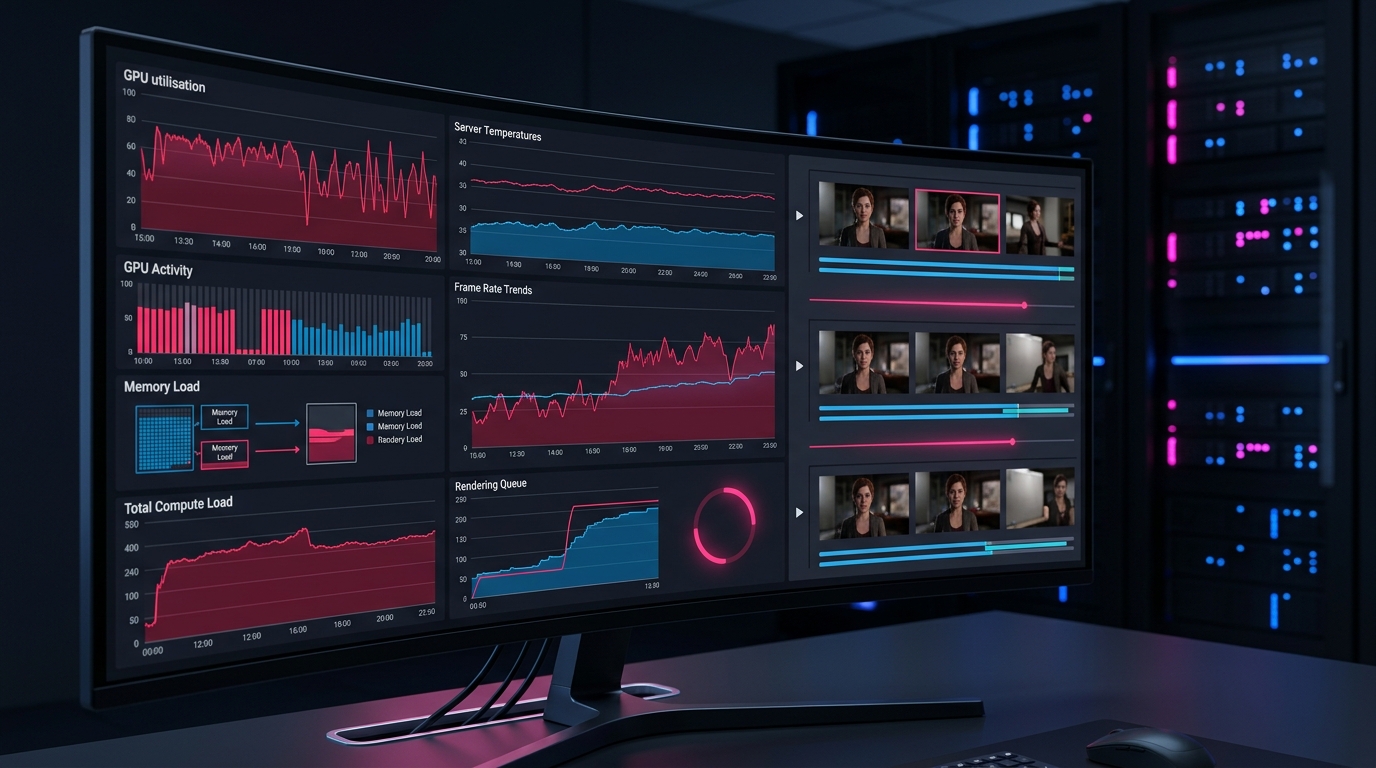
Enterprise LoRA training metrics have improved significantly by mid-2026. Training a production-ready LTX LoRA now takes approximately 45 minutes on a single H100 GPU. For local on-premises setups, a minimum of 24GB VRAM is required for stable inference, reflecting a stabilization in hardware costs compared to the previous year. Additionally, cloud deployments on platforms like Fal.ai cost roughly $0.02 per generated video second. These statistics highlight the financial viability of native video fine-tuning, allowing studios to achieve perfect character continuity at a fraction of traditional VFX costs.
Workflow Infographic Overview
The accompanying visual infographic maps the complete lifecycle of enterprise AI video production. It details the transition from raw dataset curation to native video fine-tuning, before illustrating the parallel deployment paths available to studios. Consequently, the graphic provides a clear comparison between local on-premises ComfyUI nodes and scalable cloud endpoints on Replicate.
Achieving Video Character Continuity: Conclusion
Therefore, mastering LoRA training is an essential skill for modern enterprise filmmaking, offering a permanent solution to the persistent issue of temporal consistency. By utilizing native Video Diffusion Models like LTX, studios can ensure flawless video character continuity, allowing digital actors to maintain their exact appearance across diverse scenes and lighting conditions.
Additionally, flexible deployment options empower studios to build their ideal infrastructure. Whether utilizing local inference via ComfyUI for maximum security or cloud rendering through Fal.ai for scalability, the workflow adapts to your needs. Consequently, post-production teams can finally meet strict commercial compliance standards while elevating motion quality to unprecedented levels. We encourage you to start preparing your datasets and initiate your first fine-tuning run today.
Frequently Asked Questions
How long does it take to train a video LoRA in 2026?
With current hardware like a single H100 GPU, training a production-ready LTX LoRA takes approximately 45 minutes.
Can I use standard image LoRAs for video generation?
While possible, image-first models lack temporal awareness, often leading to flickering. Consequently, native video LoRAs are highly recommended for professional video character continuity.
What are the VRAM requirements for local inference?
For stable inference of native video models on local on-premises setups, a minimum of 24GB VRAM is required.