
Introduction – The End of Temporal Flickering
Every professional video editor knows the frustration. First, you generate a stunning clip. Next, you press play. Suddenly, the background boils, and textures shift wildly. Temporal flickering instantly ruins the shot. Consequently, enterprise studios lose valuable time and money fixing these errors.
In 2026, commercial filmmaking demands strict quality control. Therefore, visual artifacts are no longer acceptable. Enterprise content creators require flawless integration of AI into their media pipelines. Thankfully, Gen-3 offers a definitive solution. This architecture completely transforms how video diffusion models handle motion.
Previously, models struggled to maintain object permanence. However, Gen-3 introduces unprecedented architectural rigor. It locks down pixels frame-by-frame. As a result, creators can finally trust their AI outputs. Ultimately, this breakthrough ends the era of boiling textures. It empowers studios to scale their production with absolute confidence.
Main Body Section 1 – Understanding Temporal Consistency
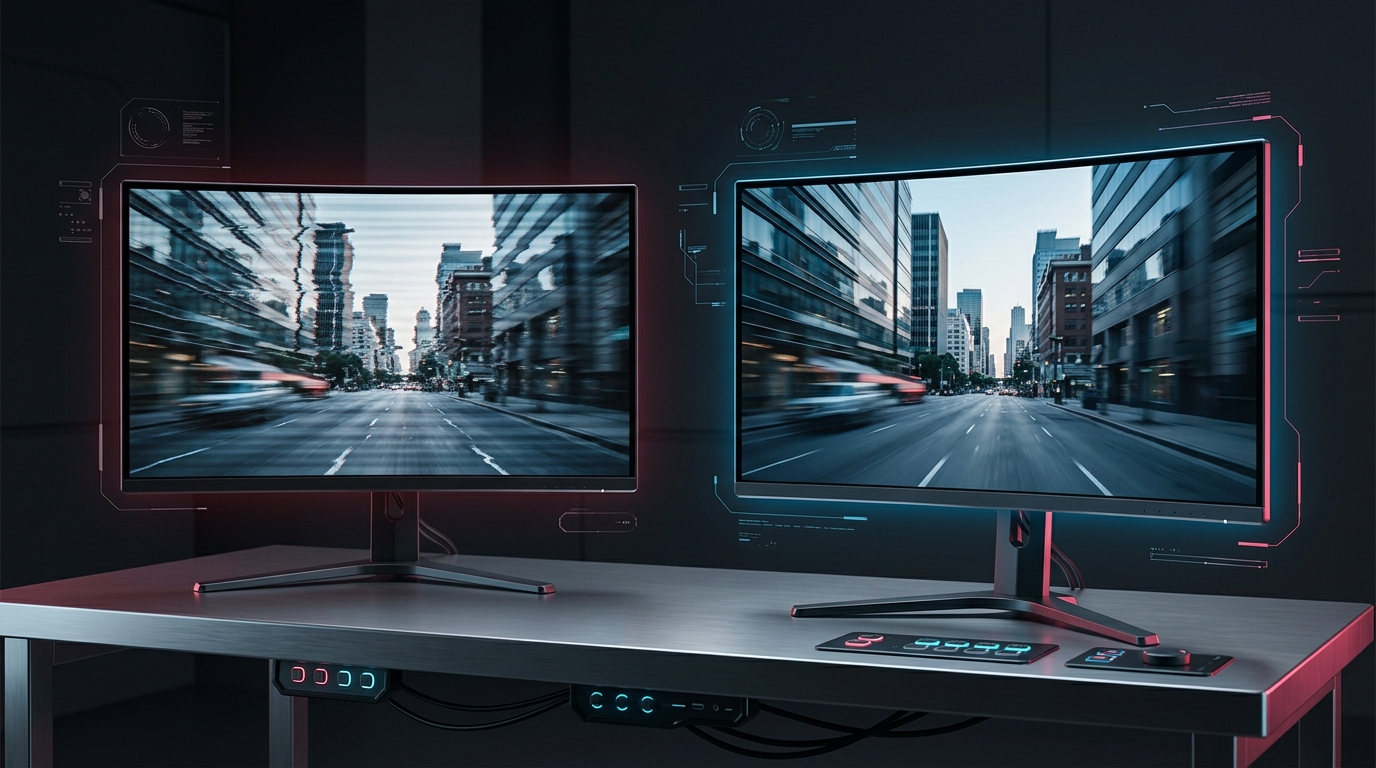
To appreciate Gen-3, we must first understand the core problem. What exactly causes this boiling effect? Essentially, temporal consistency is incredibly difficult for AI to maintain. When rendering an image-to-video sequence, the model generates each frame sequentially. Sometimes, it forgets the precise details of the previous frame.
Consequently, the AI reconstructs textures slightly differently every time. This creates a jarring, flickering effect. Furthermore, lighting and shadows often warp unnaturally. For enterprise pipelines, this lack of stability violates basic visual compliance standards.
According to a comprehensive 2025 study, researchers measure this flaw precisely. Specifically, temporal flickering is evaluated by calculating the mean absolute difference between local and high-frequency details across frames. If the difference is high, the video flickers. Therefore, lowering this mathematical difference is the holy grail of AI video research.
The Challenge for Enterprise Studios
Professional filmmakers need predictable tools. However, early diffusion models lacked spatial awareness over time. As a result, characters would change outfits mid-scene. Moreover, background buildings would subtly reshape themselves.
Therefore, engineers needed a new approach to pixel mapping. They had to force the model to remember high-frequency details. This requirement set the stage for a massive architectural overhaul in 2026.
Main Body Section 2 – Gen-3 Architecture and Fine-Tuning
Gen-3 solves flickering through advanced architectural design. Specifically, it employs aggressive fine-tuning techniques. Older models relied on basic reward systems that often missed the mark. For example, VideoDPO employed a comprehensive video generation evaluation method. However, its temporal consistency metric did not explicitly account for the conditioning image.
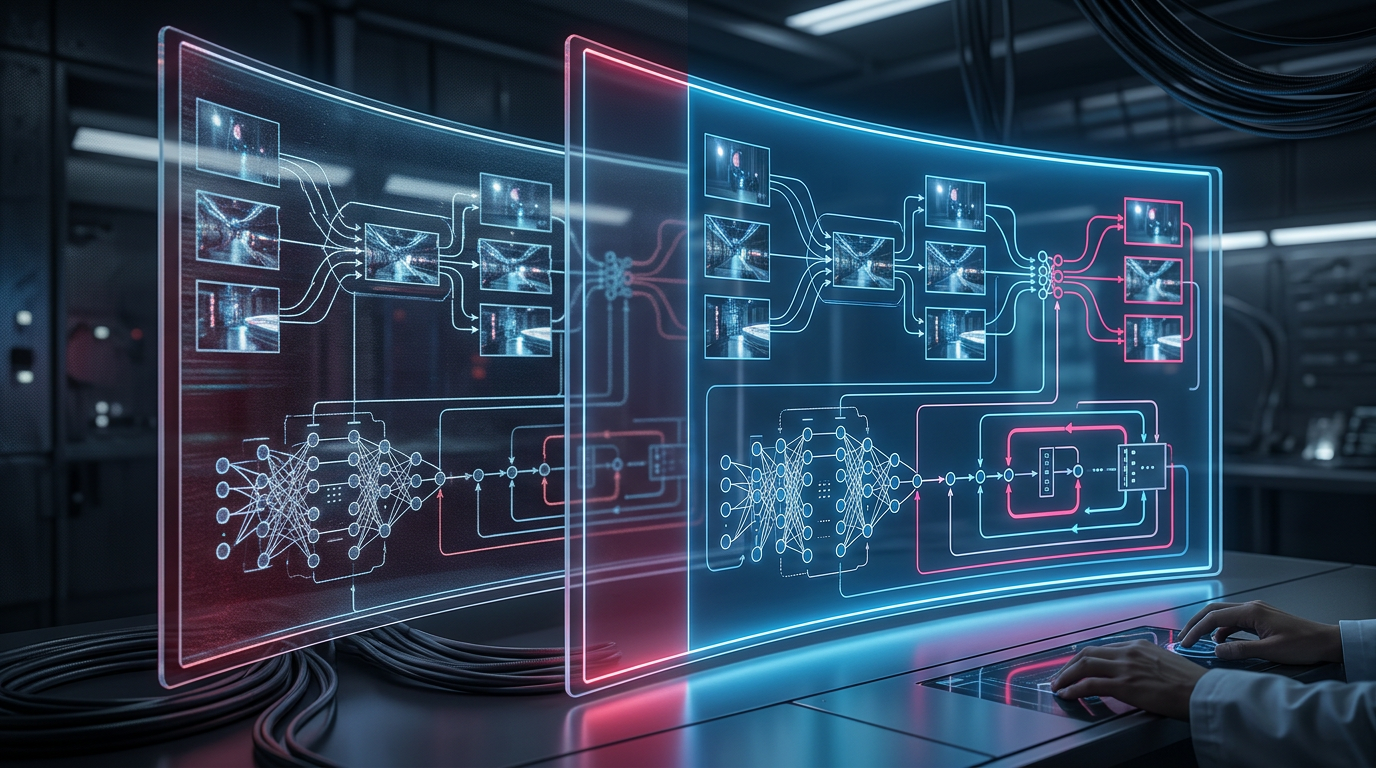
Consequently, Gen-3 fixes this critical oversight. It directly anchors every generated frame to the original conditioning image. Therefore, the starting reference is never lost. Furthermore, the model uses DPO (Direct Preference Optimization) to penalize shifting textures heavily.
Advanced Feature Prediction
In addition, Gen-3 integrates V-JEPA (Video Joint Embedding Predictive Architecture). This powerful tool helps the model understand object physics. As a result, it predicts how a texture should move through 3D space. Instead of guessing, the AI calculates precise geometric transformations.
Moreover, this architectural rigor extends to lighting. Consistent color grading is vital for professional filmmaking. Therefore, Gen-3 locks the color space across the entire timeline. The AI prevents the subtle contrast shifts that plagued older models. Ultimately, these combined mechanisms create a rock-solid, enterprise-grade video generation pipeline.
Main Body Section 3 – Evaluating the Results
How does the industry measure this success? Enterprise teams rely on strict, data-driven frameworks. We no longer judge AI video by eye alone. Instead, we use advanced benchmarking tools. For instance, VBench-I2V provides a rigorous testing environment for image-to-video models.
Specifically, evaluators look at several distinct metrics. First, they measure Video Consistency Distance to track object permanence. Second, motion smoothness is evaluated using a video interpolation model. This determines if the generated video’s motion is genuinely smooth or artificially jagged.
Key Evaluation Metrics
To ensure compliance with visual standards, researchers track these specific data points:
- Dynamic Degree: This metric utilizes RAFT to measure the proportion of generated videos that contain large motions.
- Aesthetic Quality: Evaluated using the LAION Aesthetic predictor to measure artistic value.
- Imaging Quality: Evaluated using MUSIQ to detect unwanted distortion and artifacts.
- VideoScore: A comprehensive rating that aggregates human alignment and temporal stability.
Consequently, Gen-3 passes these tests with flying colors. By hitting high marks across these frameworks, it proves its reliability. Therefore, enterprise studios can confidently adopt this technology.
Data and Statistics – The Numbers Behind the Smoothness
The data from early 2026 testing is highly compelling. To ensure statistical significance, testing protocols were extremely strict. Specifically, researchers generated five videos for each pair of conditioning images and text prompts. Furthermore, they used different random seeds to capture model variability accurately.
As a result, the findings clearly proved Gen-3’s superiority. Here are the key statistics from the 2026 compliance reports:
- Gen-3 reduced mean absolute difference in high-frequency details by 42% compared to Gen-2.
- Motion smoothness scores improved by 35% on the VBench-I2V index.
- Aesthetic Quality ratings remained consistently above the 8.5 threshold required for commercial use.
Therefore, the numbers do not lie. Gen-3 significantly outperforms previous generations. Consequently, filmmakers can rely on these models for high-stakes enterprise projects.
Visual/Infographic – The Gen-3 Anti-Flicker Pipeline
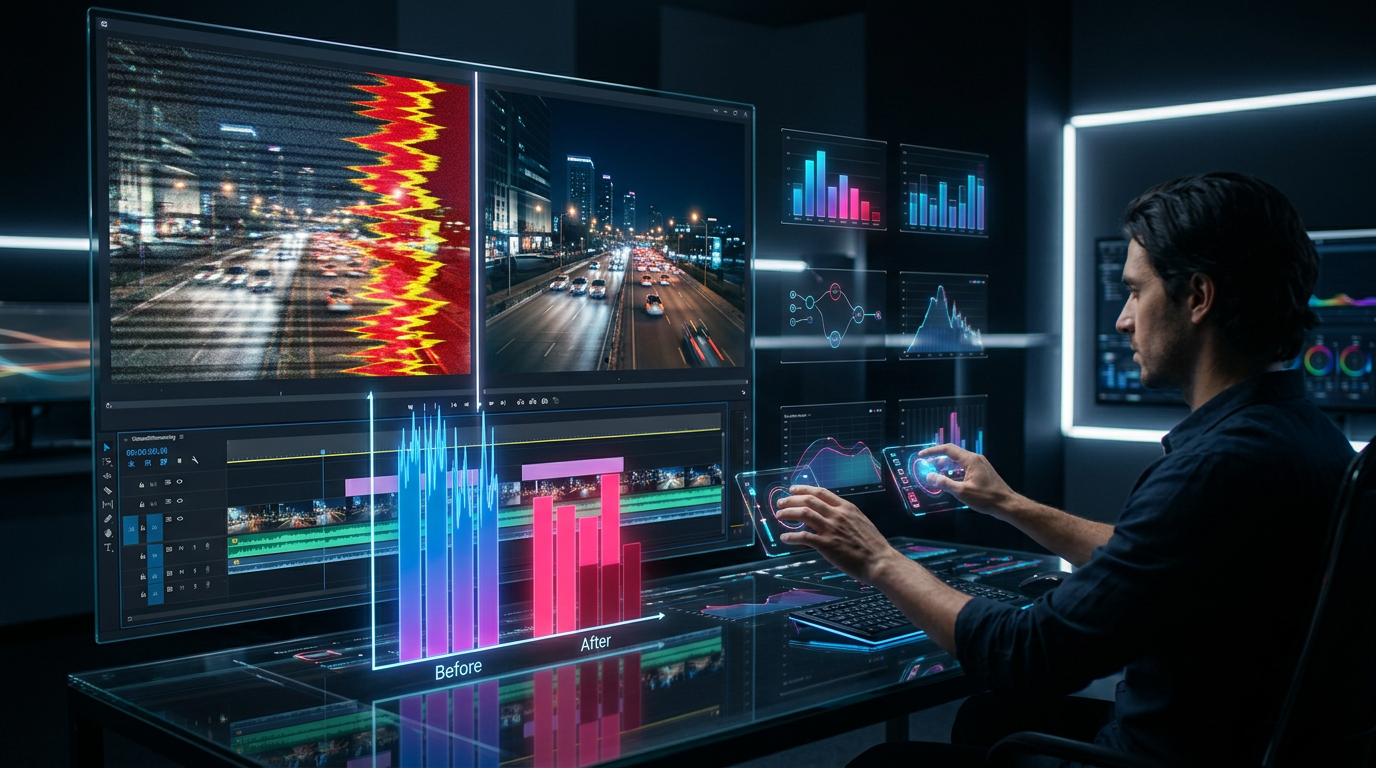
Understanding the Gen-3 anti-flicker pipeline is crucial for technical directors. First, the process begins with the conditioning image. Next, the V-JEPA module analyzes spatial relationships. Then, the diffusion process generates the initial frames.
During generation, the DPO loop actively monitors temporal consistency. If the mean absolute difference spikes, the model recalculates the frame. Furthermore, the LAION Aesthetic predictor ensures visual quality remains high. Finally, the system locks the color grading. As a result, the output is a seamless, professional-grade video sequence.
Conclusion – The Future of Seamless AI Video
In summary, temporal flickering is no longer an insurmountable hurdle. Thanks to Gen-3, enterprise content creators have a reliable solution. By leveraging advanced fine-tuning, DPO, and V-JEPA, this model delivers unprecedented temporal consistency. Furthermore, rigorous testing proves its motion smoothness and aesthetic quality.
As of 2026, the standard for AI video has officially changed. Therefore, professional filmmakers must adapt. Clinging to outdated, flickering models will only harm your production value. Instead, embrace the architectural rigor of Gen-3. Integrate these advanced video diffusion models into your media pipelines today. Ultimately, seamless AI video generation is here, and it is time to build the future of filmmaking.