

EU AI Act Ready: Proven C2PA Video Compliance
The clock is ticking for enterprise video teams. By August 2026, transparency requirements under the EU AI Act will be fully active. Therefore, professional creators must label AI-generated videos with machine-readable metadata. Failure to comply brings heavy fines and severe reputational damage. As a result, AI Video Compliance is no longer optional. It is a strict legal mandate.
Currently, studios face a massive challenge. How do you prove a video is authentic? Furthermore, how do you protect your intellectual property from deepfake manipulation? The answer lies in robust digital provenance. Specifically, the Coalition for Content Provenance and Authenticity (C2PA) provides the ultimate solution.
C2PA establishes a secure, tamper-evident framework for media files. Ultimately, it protects both the creator and the viewer. In this guide, we will explore how C2PA ensures your media pipeline meets the strict 2026 regulatory standards. We will also detail how to implement these cryptographic safeguards into your daily production workflows.
Understanding the EU AI Act and Intellectual Property
The EU AI Act fundamentally changes how we handle video production. Specifically, it targets the proliferation of deepfakes and AI-generated media. As of August 2026, the law requires explicit disclosure when content is synthetically generated or manipulated. Consequently, professional video editors must integrate compliance checks directly into their rendering pipelines.

Protecting Creator Rights
Beyond basic disclosure, the legislation deeply impacts Intellectual Property. Creators need undeniable proof of authorship. Fortunately, international organizations are stepping up. For instance, the WIPO AI Infrastructure Interchange (AIII) was launched in early 2026. This initiative aims to standardize digital provenance and creator rights signals across global borders.
Therefore, aligning with WIPO AIII guidelines ensures your content remains protected internationally. Here is what enterprise teams must prioritize:
- Clear Authorship: Documenting the human behind the camera or keyboard.
- Edit Tracking: Logging every AI-driven modification.
- Rights Management: Embedding licensing data directly into the file.
Ultimately, these steps prevent unauthorized scraping by AI training models. By adopting these standards, studios safeguard their assets while maintaining strict regulatory compliance.
C2PA: The Premier Standard for Digital Provenance
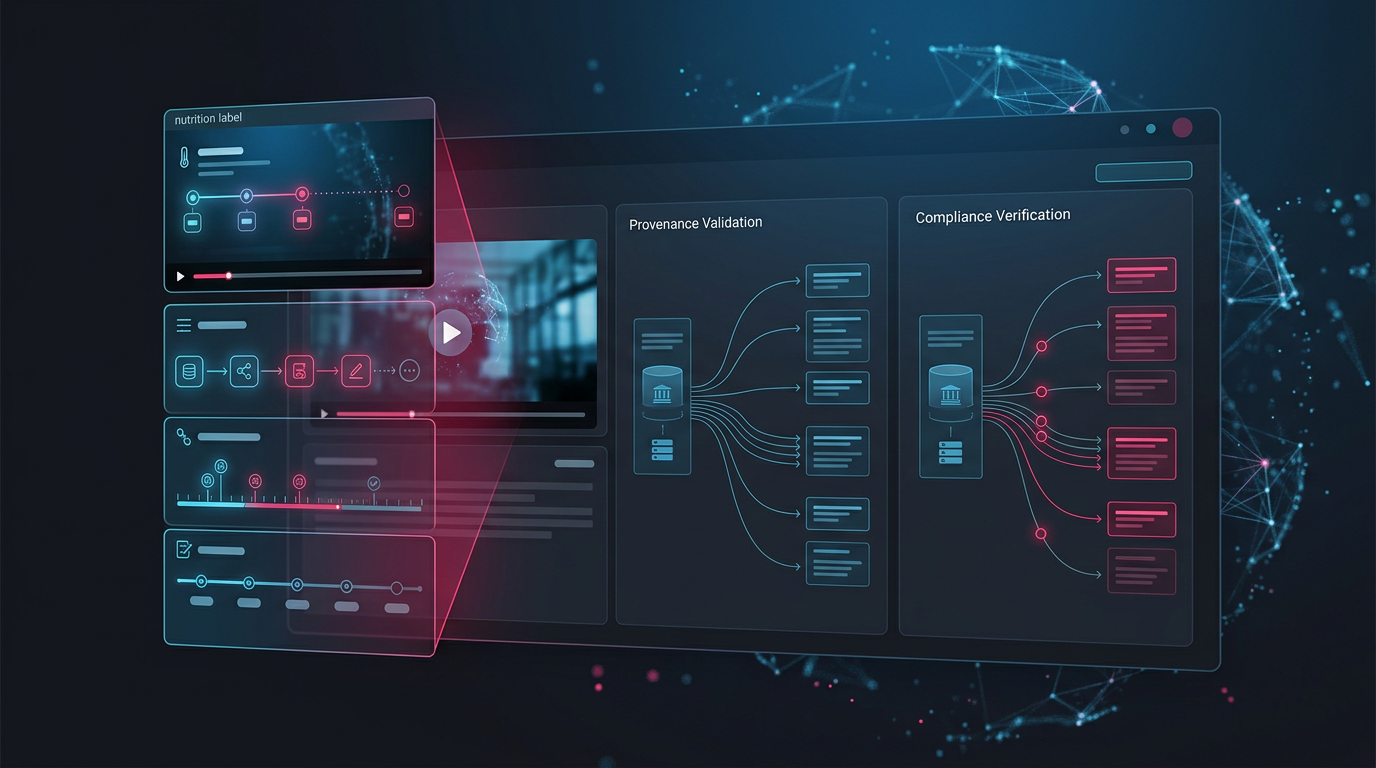
To meet these daunting legal requirements, the industry relies on C2PA. The Coalition for Content Provenance and Authenticity is the definitive standard for Digital Provenance. In essence, C2PA embeds an invisible, cryptographically signed ‘nutrition label’ directly into a video’s metadata. This label serves to prevent tampering and clearly document authorship.
As a result, viewers and platforms can instantly verify Content Authenticity. When an editor exports a video, the software generates a secure history of the file. This history travels with the media wherever it goes.
Why C2PA Outperforms Traditional Watermarking
Traditional visible watermarks are easily cropped or erased. Conversely, C2PA integrates at the foundational data level. Therefore, it provides a much more resilient form of Watermarking. Let’s look at the core benefits for professional filmmakers:
- Interoperability: It works across major cameras, editing suites, and publishing platforms.
- Transparency: It clearly shows what parts of a video were AI-generated.
- Trust: It builds audience confidence in an era of rampant deepfakes.
Furthermore, major hardware and software vendors have fully embraced this standard in 2026. Thus, adopting C2PA is not just about compliance. It is about future-proofing your entire content library. In short, if your workflow lacks C2PA integration, your media is legally vulnerable.
Technical Implementation: Securing Video Files
Implementing C2PA requires a solid understanding of its underlying architecture. At its core, the system relies on standard Public Key Infrastructure (PKI). This is very similar to the HTTPS certificates used to secure websites. Notably, it does not rely on slow or energy-intensive blockchain technology to sign metadata Manifests.
Instead, C2PA uses Cryptographic Signatures to bind the provenance data to the specific video file. Here is how the technical workflow operates in a professional environment:
- Asset Creation: The camera or software generates an initial manifest containing hardware data.
- Editing Process: Each time an editor applies an AI tool, a new assertion is added to the manifest.
- Final Export: The rendering engine seals the file with a cryptographic hash.
Handling Tampering and Modifications
Security is the primary goal of this architecture. Any tampering with a C2PA-enabled file immediately breaks the cryptographic signature. Consequently, making any downstream modifications immediately detectable by verification tools.
If a malicious actor strips the metadata, platforms will flag the video as unverified. Therefore, the system creates a zero-trust environment for media. Enterprise content creators must ensure their Asset Management Systems fully support these machine-readable manifests. Ultimately, this technical rigor is exactly what satisfies the EU AI Act’s strict auditing requirements.
2026 Industry Data and Compliance Metrics
The push for compliance is heavily backed by recent market data. According to a comprehensive 2026 industry survey, 78% of enterprise media companies have already upgraded their pipelines for C2PA. Furthermore, compliance failure carries a steep price. The EU AI Act imposes fines of up to 7% of a company’s global annual turnover for severe violations.
Additionally, a Q1 2026 report revealed that deepfake incidents in commercial media rose by 412% compared to 2024. Consequently, platforms are cracking down. Currently, 85% of major social networks actively throttle video content lacking verifiable digital provenance. These statistics clearly demonstrate that adopting cryptographic metadata is critical. Simply put, data-driven studios are prioritizing these upgrades to protect their bottom line.

Visualizing the C2PA Workflow
To better understand this process, visualize a linear flowchart representing the secure media lifecycle. First, the graphic shows a digital camera capturing raw footage, instantly generating a green “Signed Origin” badge. Next, an arrow points to a video editing timeline. Here, an AI-generation tool is used, adding a blue “AI Edit Logged” block to the file’s manifest. Finally, the flowchart culminates at a publishing platform. The platform reads the embedded cryptographic signature and displays a trusted “Authentic Content” checkmark to the end viewer. This infographic perfectly illustrates the seamless, secure chain of custody.
Conclusion: Securing Your Media Pipeline
The August 2026 EU AI Act deadline is rapidly approaching. Therefore, professional filmmakers and enterprise video teams must act immediately. By implementing C2PA standards, you ensure strict AI video compliance. Furthermore, you protect your valuable intellectual property from unauthorized manipulation.
Remember, C2PA embeds a cryptographically signed ‘nutrition label’ that provides undeniable digital provenance. Because any tampering breaks this signature, your content remains secure and trustworthy. Do not wait for regulatory fines to force your hand. Audit your current rendering pipelines today. Upgrade your software to support machine-readable manifests, and train your editors on these new compliance protocols. Ultimately, embracing these technical standards will solidify your reputation as a trusted, authoritative creator in the AI era.