
The Lens as a Narrative Filter
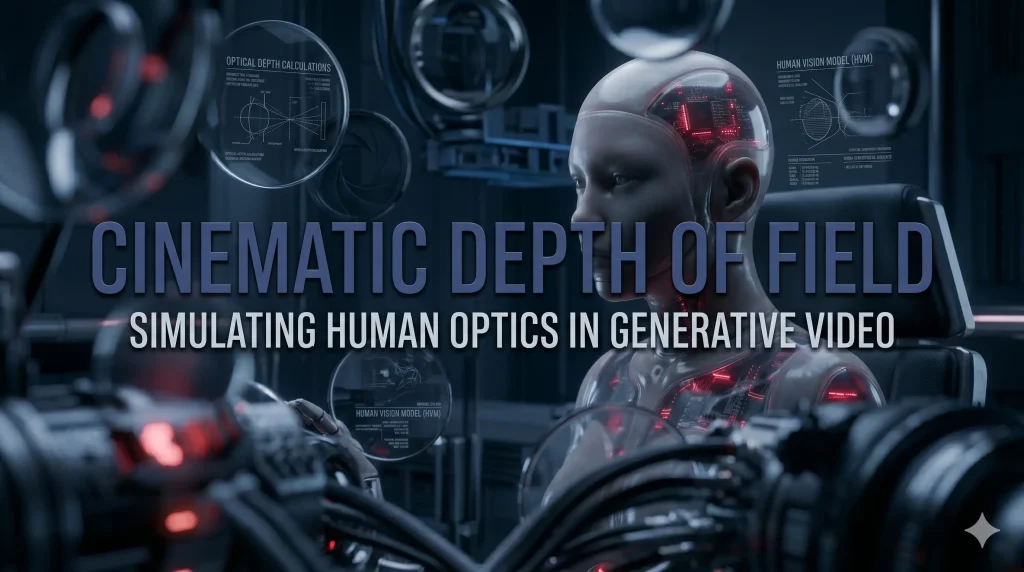
When a person walks through the physical world, their eyes do not see the environment as a uniformly sharp, flat canvas. Instead, human vision operates on a dynamic system of focus. When you lock your eyes onto a subject close to you, your brain filters out the background, transforming distant buildings, trees, and lights into a soft, blurry landscape.
In traditional filmmaking, this optical phenomenon is known as Depth of Field (DoF).
For decades, master cinematographers have utilized specialized, large-format camera sensors and wide-aperture lenses to control this visual layer. By selectively blurring the background, directors can instantly guide the viewer’s eye, isolate a character’s emotional expression, and mask distracting environmental details.
As we scale media production using generative AI engines in 2026, mastering this optical physics engine is a non-negotiable step for high-end production. Standard, low-effort text prompts often output deep-focus shots where everything from a foreground blade of grass to a distant mountain peak is perfectly sharp. This uniform sharpness breaks real-world physical logic, triggers the sub-conscious alarms of the Uncanny Valley, and screams “artificial generation” to an experienced viewer.
To bridge the gap between algorithmic rendering and classic filmmaking, creators must learn how to force generative models to mimic true human optics and physical lens constraints.
1. The Physics of Focus: Aperture, Focal Length, and Distance
To control depth of field inside a generative video engine, you must understand the three real-world physical variables that dictate focal depth on a live movie set.
The Three Pillars of Optical Depth
- Aperture Size (f-stop): The physical opening inside a camera lens that lets in light. A wide opening (indicated by a low f-stop number like $f/1.4$ or $f/2.0$) produces a ultra-shallow depth of field, dissolving the background into blur. A narrow opening (like $f/11$ or $f/16$) creates deep focus, keeping the entire scene sharp.
- Focal Length (mm): The magnification factor of the lens system. Telephoto lenses (such as 85mm or 135mm focal lengths) naturally compress background space and compress the depth of field far more aggressively than wide-angle glass (like a 24mm lens).
- Proximity to Subject: The physical distance separating the front element of the lens from the primary focus point. The closer the camera moves to a subject’s face, the shallower the surrounding depth of field becomes.
[Camera Lens] ======> (Shallow Focus Plane) ======> [ Subject ] -------> [ Blurred Background ]
   (Wide Aperture f/1.4)                              (Sharp)              (Bokeh Disks)
When building prompt structures inside advanced platforms like Higgsfield AI Studio or Kling 3.0, you should directly inject these hardware properties. Instead of using vague descriptions like “blurry background,” hardcode technical commands into your scripts: “Shot on an 85mm prime lens at f/1.8, shallow depth of field, separation between subject and background textures.” This forces the model’s transformer core to pull from training data recorded on actual high-end cinema gear.
2. Replicating Lens Textures: Anamorphic Blur vs. Spherical Bokeh
Not all background blurs are created equal. The aesthetic quality of out-of-focus light points is known in cinema as Bokeh. The shape, structure, and behavior of this bokeh are determined entirely by the design of the physical glass blades inside a camera lens.
Spherical Lenses: The Clean Standard
Traditional spherical lenses feature circular internal apertures. When they render out-of-focus background lights, they produce clean, perfectly round, uniform bokeh disks. This look is the standard style for corporate video work, modern documentaries, and clean commercial marketing assets.
Anamorphic Lenses: The Hollywood Look
For indie directors and content strategists aiming for a prestigious, cinematic look, Anamorphic Glass is the ultimate tool. Anamorphic lenses use oval glass elements to squeeze a wide-screen image onto a standard sensor block. This physical compression introduces unique visual markers:
- Oval Bokeh Disks: Background light sources deform into vertical, oval shapes rather than perfect circles.
- Horizontal Lens Flares: Intense light hitting the lens streaks horizontally across the frame in a brilliant blue or streak line.
- Chiaroscuro Fall-off: The transition between the ultra-sharp subject plane and the deep background blur happens on a smooth gradient, creating a three-dimensional look that guides human emotion.
3. The Focal Pacing Matrix: Managing Audience Focus
To assist video agencies, documentary filmmakers, and asset creators in structuring their shots cleanly, we can map out a targeted focal matrix based on narrative intent:
| Shot Framework | Optical Configuration | Background Character | Primary Storytelling Value |
| Extreme Close-Up (ECU) | 90mm Macro Lens at $f/2.0$, tight proximity. | Dissolves into abstract, smooth textures. | Captures intense micro-expressions, facial muscle tremors, and deep psychological vulnerability. |
| Medium Portrait Shot | 85mm Prime Lens at $f/1.4$, standard distance. | Softly blurred with prominent, circular bokeh. | Isolates the speaker cleanly from busy streets or crowded office settings; perfect for high-end interviews. |
| Cinematic Establishing | 35mm Wide Anamorphic at $f/2.8$, distant framing. | Minor background softening with oval lights. | Blends sweeping environmental scale with a distinct sense of Hollywood scale and artistic depth. |
| Deep-Focus Narrative | 24mm Wide Lens at $f/8.0$ or narrower. | Crystal clear from foreground to deep background. | Shows characters interacting directly with their environment; excellent for spatial tracking and blocking moves. |
4. Technical Quality Control: Auditing AI Bokeh Integrity
Because generative AI video models do not actually pass physical light rays through physical glass, they can occasionally struggle to sustain accurate focal depth across a moving timeline. When running an editorial audit on your portfolio, keep an eye out for these technical errors:
- Focal Bleeding Anomalies: Check the thin margins along your subject’s body, specifically around complex outlines like fine hair strands or fingers. First-generation models often fail to map depth maps accurately, causing the hair to look unnaturally sharp while the skull or neck area incorrectly blurs into the background.
- Temporal Bokeh Swimming: Background bokeh circles should remain structurally stable or warp smoothly in sync with camera panning moves. If the background circles appear to shake, flicker, change shapes, or morph into random geometric objects between frames, the file has suffered a temporal logic breakdown.
- Mismatched Reflection Flares: If your main character is standing in a shallow-focus environment, any reflections catching their eyeglasses, pupils, or watch face must match the soft, diffused color profile of the surrounding blurred space. Sharp, hyper-focused reflections inside an un-sharp scene break optical physics and pull the viewer out of the story.
To discover how to pair these advanced depth of field setups with classic, high-contrast shadow work, read our masterclass: Courtroom Chiaroscuro: Authenticating Video Evidence with Lighting.
FAQ Section: Perfecting Lens Simulations
Q: Can I fix a video asset that was accidentally generated with too much background sharpness?
A: Yes. If a text-to-video clip turns out with an unappealing deep focus, you can bring the master asset into post-production suites like DaVinci Resolve or Runway Gen-4.5. By applying an isolated depth-mask over the subject, you can use lens-blur filters to manually introduce a clean, graduated depth of field after generation.
Q: Which generative AI model handles anamorphic lens physics most accurately in 2026?
A: Luma Dream Machine (Ray 3.14) and Google Veo 3 showcase exceptional understanding of complex optical physics. Both engines process anamorphic lighting values, oval bokeh structures, and authentic lens flare compressions with an incredible level of accuracy that matches real cinema hardware.
Q: Do high-contrast shadows change how depth of field looks on screen?
A: Absolutely. When you pair an ultra-shallow depth of field with heavy Chiaroscuro lighting, the dark shadow zones drop off into soft, ink-like darkness while the highlights burst into beautiful bokeh patterns. This combination creates a rich sense of three-dimensional depth, giving your digital videos an incredibly professional look.
To see how to align these high-end filmmaking tutorials with a structured, multi-tier blog monetization plan, review our framework: The 12-Month Roadmap: Building a Legal-Cinematic Media Empire.
Conclusion: Honoring the Language of Traditional Cinema
Replicating true human optics and lens mechanics is what separates basic, artificial AI loops from authentic, emotionally resonant cinema. By understanding the real-world physics of aperture controls, focal lengths, and bokeh shapes, you can design intentional prompt structures that command deep respect from your viewers.
For digital content platforms and media creators growing high-value properties like bestaivideotools.com, providing clear, technically precise guidance on these advanced cinematography mechanics builds immense authority, ensuring your platform establishes itself as the ultimate benchmark for modern digital filmmaking excellence.